
A free hit gives a batter an opportunity to attack without worrying about most conventional dismissals. Yet one question often confuses cricket fans: Can you be stumped on a free hit?
The answer is no. Under the ICC Men’s ODI and T20I playing conditions, a batter cannot be dismissed stumped on a free hit. Even if the batter steps out of the crease, misses the ball and the wicketkeeper removes the bails, stumping is not a permitted method of dismissal.
However, a free hit does not make the batter completely safe. Run out, hitting the ball twice and obstructing the field remain possible methods of dismissal.
What Is a Free Hit in Cricket?
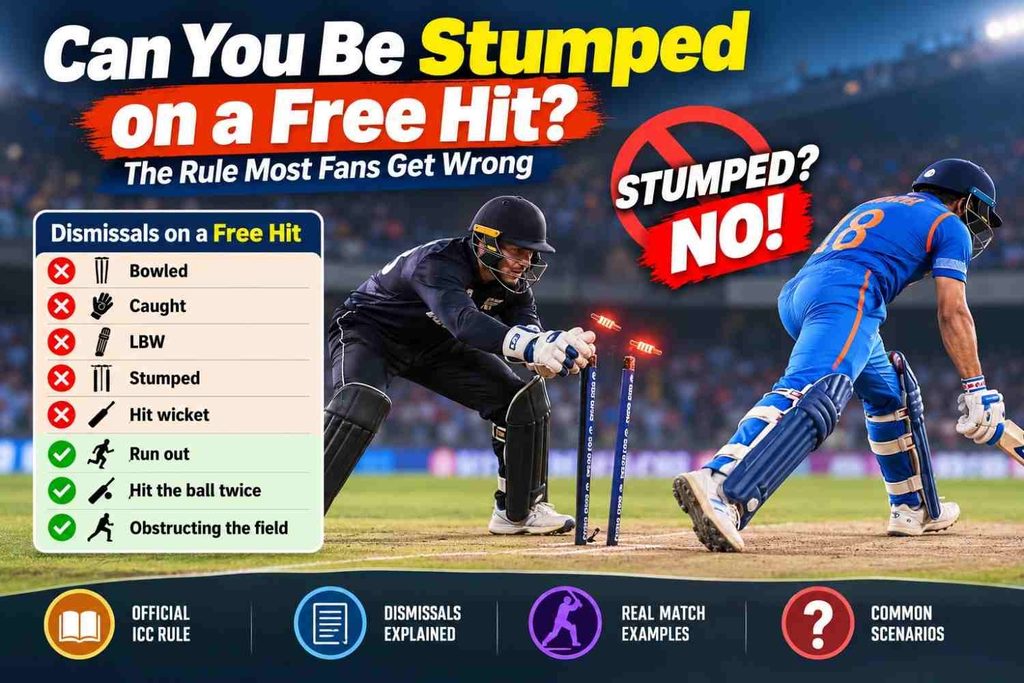
A free hit is a delivery awarded after a no-ball in limited-overs cricket. Under Clause 21.19 of the ICC playing conditions, the delivery following a no-ball is a free hit.
The batter is protected from most conventional dismissals, including bowled, caught, LBW, stumped and hit wicket. If the free-hit delivery is itself a no-ball or a wide, the next delivery is also a free hit.
Can You Be Stumped on a Free Hit?
No, a batter cannot be dismissed stumped on a free hit.
Under Clause 21.19.2 of the ICC Men’s ODI and T20I playing conditions, the striker can be dismissed only in circumstances that apply to a no-ball, even if the free-hit delivery is called wide.
The three permitted methods of dismissal are:
- Run out
- Hitting the ball twice
- Obstructing the field
Stumping is not included in this list.
Consider the following example.
A spinner delivers a free hit. The batter advances down the pitch to hit the ball over the boundary but misses it. The wicketkeeper collects the ball and breaks the stumps while the batter remains outside the crease.
On a normal legal delivery, the batter could be dismissed stumped if the requirements of the stumping law were satisfied. On a free hit, however, the batter cannot be given out stumped.
The wicketkeeper may remove the bails, but that action does not make the batter out under the stumping law. Leaving the crease does not automatically result in a dismissal.
Why Is Stumping Not Allowed on a Free Hit?
Clause 21.18 of the ICC Men’s ODI playing conditions states that, when a no-ball has been called, neither batter can be dismissed except through hitting the ball twice, obstructing the field or run out. Clause 21.19 extends these restrictions to a free hit.
Under the ordinary stumping law, the striker can be dismissed stumped when the delivery is not a no-ball, the striker is outside their ground, no run is being attempted, and the wicketkeeper fairly breaks the wicket without the intervention of another fielder.
However, stumping is not one of the permitted dismissals on a free hit. The wicketkeeper therefore cannot use the ordinary stumping rule to dismiss the striker on that delivery.
This protection does not remove every risk associated with playing the ball. A batter can still be dismissed through the three methods permitted under the free-hit rule.
Which Dismissals Are Allowed on a Free Hit?
The free-hit rule permits three methods of dismissal. The following table summarises which dismissals are allowed under the ICC ODI and T20I playing conditions.
| Dismissal method | Allowed on a free hit? | Explanation |
| Bowled | No | The batter cannot be dismissed bowled off the free-hit delivery. |
| Caught | No | A catch does not dismiss the batter on a free hit. |
| LBW | No | The batter cannot be given out leg before wicket. |
| Stumped | No | Stumping is not a permitted method of dismissal. |
| Hit wicket | No | The batter cannot be dismissed hit wicket off the free-hit delivery. |
| Run out | Yes | A batter can be run out when the Run Out law permits the dismissal. |
| Hitting the ball twice | Yes | The batter can be dismissed under the relevant law. |
| Obstructing the field | Yes | The batter can be dismissed if their actions meet the requirements of the law. |
The table concerns dismissals of the striker off the free-hit delivery. The non-striker can also be run out when the Run Out law permits the dismissal.
Can a Batter Be Run Out on a Free Hit?
Yes. A batter can be run out on a free hit when the requirements of the Run Out law are satisfied.
A free hit does not protect a batter who is attempting a run and fails to make their ground.
Imagine that the batter hits the ball towards a fielder and attempts a quick single. The fielder throws the ball towards the wicketkeeper, who breaks the stumps before the batter makes their ground.
If the requirements of the Run Out law are satisfied, the batter can be given out. The crucial distinction is the method of dismissal: stumping is not permitted on a free hit, but a valid run out remains possible.
Can the Wicketkeeper Run Out a Batter on a Free Hit?
Yes, a wicketkeeper can run out a batter on a free hit when the Run Out law permits the dismissal. There are three important situations.
1. The Batter Is Attempting a Run
Yes, the batter can be run out.
If the batter attempts a run and fails to make their ground before the wicketkeeper fairly breaks the wicket, the batter can be given out run out, provided the requirements of the law are satisfied.
2. Another Fielder Is Involved
Yes, a run out may be possible.
If another fielder intervenes before the wicketkeeper breaks the wicket, the specific exception in Clause 38.2.2.2 does not apply. A run out may be valid if the other requirements of the law are satisfied.
3. The Batter Is Not Running and the Wicketkeeper Acts Alone
No, the batter is not out run out.
Clause 38.2.2.2 states that the striker is not out run out when a no-ball has been called, the striker is outside their ground and is not attempting a run, and the wicketkeeper alone fairly puts down the wicket without the intervention of another fielder.
On a free hit, a batter who wanders down the pitch, is not attempting a run and has the bails removed by the wicketkeeper alone is not out at all.
The batter cannot be given out stumped because the free-hit rule prohibits that dismissal. The batter also cannot be given out run out because Clause 38.2.2.2 specifically protects them in these circumstances. The MCC’s worked ruling on this scenario reaches both conclusions.
Can You Be Stumped on a Free Hit If the Ball Is Wide?
No. A wide call on a free hit does not make stumping possible.
Under Clause 21.19.2 of the ICC Men’s ODI and T20I playing conditions, the striker can be dismissed only in circumstances that apply to a no-ball, even when the free-hit delivery is called wide.
Suppose the bowler delivers the free hit well outside the batter’s reach. The batter moves down the pitch, misses the ball, and the wicketkeeper breaks the stumps.
The striker cannot be dismissed stumped. Under Clause 21.19.1, a wide on a free-hit delivery means that the next delivery is also a free hit.
What Happens If the Batter Is Bowled on a Free Hit?
The batter is not out bowled if the ball hits the stumps on a free hit. The ball can remain in play, allowing the batting side to score runs.
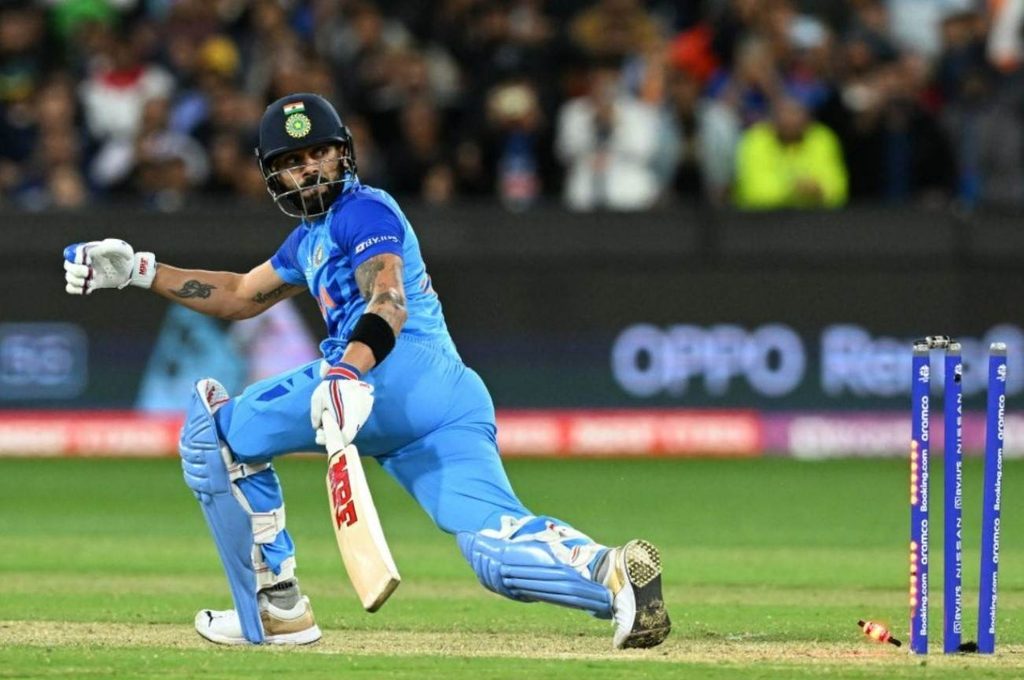
A famous example occurred during the 2022 ICC Men’s T20 World Cup match between India and Pakistan at the Melbourne Cricket Ground on 23 October 2022.
Virat Kohli was bowled by Mohammad Nawaz on a free hit. The ball deflected off the stumps and ran away, allowing Kohli and Dinesh Karthik to complete three byes. India won the match by four wickets.
The incident demonstrated why a batter can survive a delivery that would normally result in a bowled dismissal.
Why Kohli Was Safe From Both Bowled and Run Out
Kohli could not be dismissed bowled because bowled is not a permitted method of dismissal on a free hit.
Clause 38.2.1.2 also states that the striker is not out run out if the ball delivered by the bowler has not touched a fielder before the wicket is fairly broken. In Kohli’s incident, the ball hit the stumps without first touching a fielder. He was therefore safe from both bowled and run out.
How Are Runs Scored When the Ball Hits the Stumps on a Free Hit?
The ICC changed its playing conditions effective from 1 June 2023. Under the revised rule, runs scored off a free hit when the ball hits the stumps count as team runs.
Kohli’s three byes occurred in October 2022, before this change took effect. The incident must therefore be described under the scoring rules that applied at the time. The revised rule applies to matches played under the updated conditions; it does not mean those runs are credited to the batter’s individual score.
Conclusion
A batter cannot be stumped on a free hit because the free-hit rule restricts dismissals to those permitted following a no-ball. Stumping, bowled, caught, LBW and hit wicket are not permitted methods of dismissal on that delivery.
However, a batter can still be dismissed run out, for hitting the ball twice or for obstructing the field.
Under Clause 38.2.2.2, a striker who is outside their ground, is not attempting a run and has the wicket broken by the wicketkeeper alone after a no-ball has been called is not out run out. The batter cannot be stumped either, so they remain not out.
Clause 38.2.1.2 also protects the striker from a run-out dismissal when the delivery itself breaks the wicket without first touching a fielder.
The key point is simple: on a free hit, a batter cannot be stumped, and in the specific circumstances covered by Clause 38.2.2.2, the batter cannot be given out run out either.
Frequently Asked Questions
No. Stumping is not one of the permitted methods of dismissal on a free hit. Even if the batter leaves the crease and the wicketkeeper breaks the stumps, the batter cannot be given out stumped.
Yes. Run out is one of the three permitted methods of dismissal on a free hit. The dismissal must satisfy the Run Out law, including its specific exceptions.
No. A batter cannot be dismissed caught off a free-hit delivery. If the batter hits the ball into the air and a fielder catches it, the batter remains not out under the free-hit rule.
No. LBW is not a permitted dismissal on a free hit. The batter cannot be given out LBW even if the delivery appears to satisfy the usual requirements of the LBW law.
Yes. Under Clause 21.19.1, if a free-hit delivery is called wide, the next delivery is also a free hit.