Third Umpire in Cricket
Cricket, Guide

The Third Umpire in Cricket: Role, Powers and Decisions Reviewed

The third umpire in cricket helps on-field umpires make accurate decisions using television replays and approved technology. From close run-outs to disputed catches and LBW appeals, the third umpire examines incidents under the applicable playing conditions.

The International Cricket Council (ICC) sets out the rules governing third-umpire referrals, the Decision Review System (DRS) and the technology available during international matches. These rules also explain how player reviews work and what happens when the evidence is inconclusive.

What Is a Third Umpire in Cricket?
third umpire

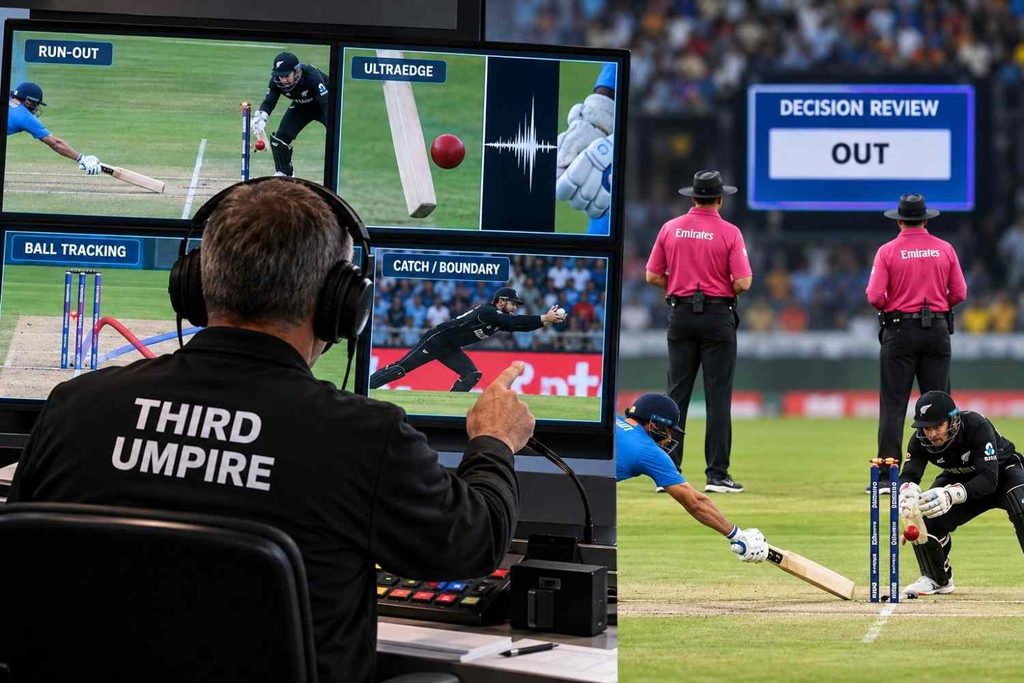
A third umpire is a match official who reviews specific incidents using television replays and, when available, approved decision-review technology. The official usually works in a designated room with access to camera footage and communication equipment.

The third umpire supports the two on-field umpires, who remain responsible for controlling the match on the field. The third umpire can examine referrals initiated by on-field umpires and player reviews requested under DRS.

The official also checks front-foot no-balls and reviews called short runs under ICC international playing conditions.

History of the Third Umpire in Cricket

A major milestone in third-umpire history occurred on 14 November 1992, during the first Test between South Africa and India at Kingsmead in Durban.

Sachin Tendulkar became the first player to be given out through a television-replay decision in international cricket. He was run out for 11 while attempting a risky single.

Jonty Rhodes was fielding at point and fielded the ball before throwing it towards the wicket, where Andrew Hudson broke the stumps. Tendulkar had been sent back by the non-striker, Ravi Shastri.

Square-leg umpire Cyril Mitchley referred the decision to third umpire Karl Liebenberg, who examined the television replay and confirmed the run-out.

The incident took place during India’s first tour of South Africa after the country returned to international cricket following the end of apartheid-era sporting isolation. The decision marked an important development in the use of television technology in cricket officiating.

Over time, the role expanded with the introduction of the Decision Review System and technologies such as Hawk-Eye and UltraEdge.

Role and Responsibilities of the Third Umpire

The third umpire examines eligible incidents and provides the findings required under the applicable playing conditions.

1. Reviewing Run-Out Decisions

Run-outs are among the most familiar incidents referred to the third umpire. The official examines camera angles to determine whether the batter was in their ground when the wicket was broken.

If the evidence shows that the batter had not made their ground in time, the batter can be given out. Otherwise, the batter is not out.

2. Checking Stumping Decisions

For a stumping decision, the third umpire checks whether the striker was out of their ground when the wicketkeeper legally put down the wicket.

The official also checks the relevant footage to determine whether the dismissal satisfies the Laws of Cricket.

3. Examining Catches

The third umpire reviews disputed catches to determine whether the ball touched the ground before the fielder completed the catch and whether the fielder maintained control.

The official can also examine whether the batter hit the ball and whether the delivery was a no-ball when the applicable procedure requires those checks.

The soft signal was abolished in international cricket effective 1 June 2023. On-field umpires no longer need to give an initial out or not-out signal when referring a catch to the TV umpire. The on-field umpires consult the TV umpire before the decision is made.

The change followed recommendations from the Men’s Cricket Committee led by Sourav Ganguly and endorsed by the Women’s Cricket Committee. Ganguly explained that soft signals were unnecessary and could cause confusion when replays were inconclusive.

The IPL had already removed soft signals for the 2021 season, two years before the international change.

4. Reviewing Boundary Decisions

The third umpire examines whether a four or six has been scored and whether a fielder touched the boundary while in contact with the ball.

Camera replays help determine whether the ball or fielder crossed the boundary in a way that affects the result.

5. Assisting With Other Dismissals

The third umpire can examine other dismissal-related incidents when the playing conditions permit a referral. These include certain caught decisions, obstructing the field and other incidents covered by the relevant review procedure.

6. Checking Front-Foot No-Balls

In international cricket, the third umpire checks the bowler’s front-foot landing using television replays. If the delivery is illegal because the front foot does not meet the requirements of the playing conditions, the third umpire informs the on-field umpire, who calls and signals no-ball.

This check helps identify overstepping that may be difficult to spot in real time.

7. Reviewing Short Runs

The third umpire automatically reviews a short-run call under ICC Test and T20I playing conditions. The official communicates the findings to the relevant on-field umpire, allowing an incorrect call to be corrected before play proceeds.

8. Acting as the Emergency On-Field Umpire

The third umpire has another defined responsibility: acting as the emergency on-field umpire if one of the two on-field umpires cannot continue, in accordance with the applicable playing conditions.

Which Decisions Can the Third Umpire Review?

Decision or incidentWhat the third umpire examines
Run-outWhether the batter was in their ground when the wicket was broken
StumpingWhether the batter was out of their ground and the wicket was put down legally
CaughtWhether the catch was completed fairly and the ball carried before touching the ground
Boundary decisionWhether the ball or fielder touched the boundary
LBWThe point of pitching, impact and projected path of the ball when DRS is available
Bat or pad contactWhether the ball hit the bat before hitting the batter’s body
Front-foot no-ballWhether the bowler’s front foot landed legally
Short runWhether the called short run was correctly identified
Other dismissal incidentsWhether the applicable playing conditions permit the referral

Not every decision can be reviewed automatically. The available procedures depend on the competition and its playing conditions.

How Does the Decision Review System Work?
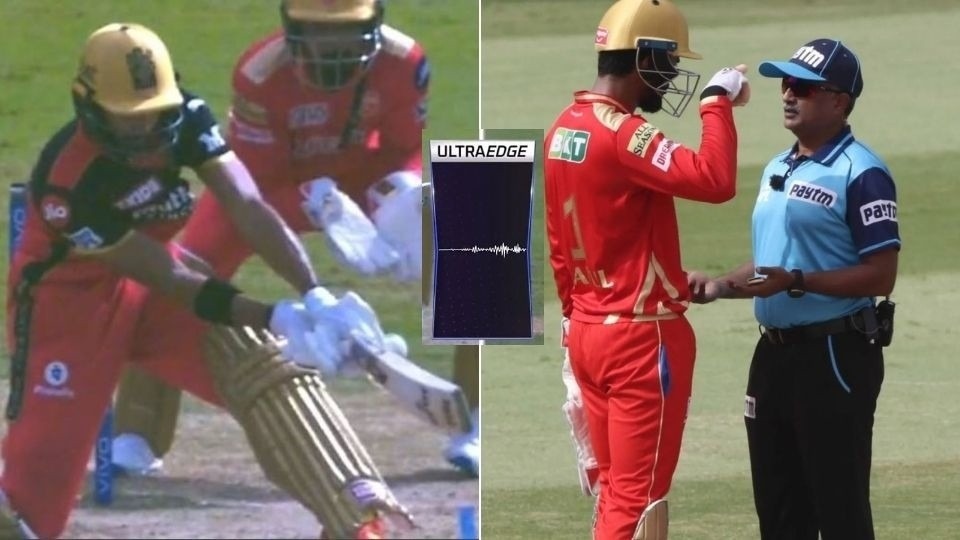
Third Umpire in Cricket

Source Image: Hindustan Times

The Decision Review System allows match officials to use approved technology to examine certain decisions. The ICC distinguishes between an Umpire Review, initiated by an on-field umpire, and a Player Review, requested by a team.

Umpire Review

An on-field umpire may refer an eligible incident to the third umpire when additional evidence is required. A close run-out is a common example.

The third umpire examines the permitted footage and communicates the findings to the on-field umpire, who completes the decision under the applicable playing conditions.

Player Review

A Player Review allows a team to challenge an eligible on-field decision when DRS is available. For example, a team may request a review of an LBW decision.

The player or captain must make the prescribed T-sign within 15 seconds after the ball becomes dead. The on-field umpire can prompt the player after 10 seconds if a review has not been requested.

Under the current ICC Men’s Test playing conditions effective October 2026, each team may make up to three unsuccessful Player Review requests per innings. Under the current ICC Men’s T20I playing conditions, each team may make up to two unsuccessful requests per innings. Successful reviews do not count towards these limits.

An LBW review resulting in Umpire’s Call also does not count towards the innings limit under these playing conditions.

What Technology Does the Third Umpire Use?

The technology available depends on the competition and the type of review.

Hawk-Eye

Hawk-Eye provides ball-tracking technology. During an eligible LBW review, it helps the third umpire assess where the ball pitched, where it struck the batter and whether it would have hit the stumps.

These three elements are commonly described as pitching, impact and wicket.

UltraEdge

UltraEdge is an approved sound-based edge-detection system used to help determine whether the ball made contact with the bat.

The third umpire examines the synchronized video and audio graph. A sharp audio spike around the moment the ball passes the bat can indicate contact. The official also checks the ball’s position in the video and considers other available evidence.

Snickometer

Snickometer is another name associated with sound-based edge detection. It helps officials investigate possible contact between the ball and bat.

Hot Spot

Hot Spot uses heat-based imaging to help identify contact between the ball and the bat or other equipment. A visible heat mark can provide evidence of contact, although the third umpire must consider the complete available evidence.

Television Replays and Slow Motion

Multiple camera angles and slow-motion footage help the third umpire examine run-outs, stumpings, catches and boundary decisions.

In a match without DRS, the third umpire has access to camera replays only. Ball-tracking and edge-detection systems such as Hawk-Eye and UltraEdge are not available as DRS review tools in such a match.

Not every competition uses every technology. The equipment and procedures depend on the applicable playing conditions.

What Happens When the Evidence Is Inconclusive?

The third umpire must follow the applicable review procedure when the available evidence is inconclusive.

For a referred catch, the soft signal no longer determines the outcome in international cricket. The third umpire examines the available footage and makes the decision under the current procedure.

For a DRS review, if the evidence does not establish that the original on-field decision should be changed, the original decision stands. In an LBW review, Umpire’s Call means that the on-field decision remains unchanged because the ball-tracking result falls within the specified marginal range.

A technical failure is different from inconclusive evidence. The ICC playing conditions provide separate procedures for dealing with failures of review technology.

Third Umpire vs On-Field Umpire

FeatureOn-field umpireThird umpire
Main locationOn the cricket fieldDesignated review room
Primary roleControls the match and makes on-field decisionsExamines eligible referrals and reviews
Main evidenceDirect observation of playTelevision replays and approved technology
Player reviewsReceives appeals and signals the reviewExamines the evidence and communicates findings
Front-foot checksReceives the no-ball information and signals the decisionChecks front-foot landing using television replays
Short-run checksCalls and signals the short runReviews the call and communicates the findings
Emergency responsibilityContinues on-field duties while ableCan act as the emergency on-field umpire if required

Both officials are part of the match officiating team. The third umpire supports on-field decision-making and operates within the authority defined by the playing conditions.

What Powers Does the Third Umpire Have?

The third umpire can examine eligible referrals, use permitted footage and technology, and communicate the findings needed to resolve a decision.

The official can help correct run-out, stumping, catch and boundary decisions, check front-foot no-balls, review short-run calls and examine eligible DRS appeals.

The third umpire cannot independently reopen every incident simply because television footage exists. The official must follow the relevant review procedure and the technology permitted for that match.

In a match without DRS, the third umpire’s work is limited to the television-replay procedures available under that competition’s playing conditions.

Why Is the Third Umpire Important in Cricket?

The third umpire helps reduce errors in decisions that are difficult to make in real time. This is particularly important for close run-outs, stumpings, boundary catches and LBW appeals.

Technology gives officials additional evidence that may not be visible at normal speed. It also helps them review front-foot no-balls and correct short-run calls.

However, technology does not eliminate every disagreement. The available camera angles may be limited, evidence may be inconclusive, and some decisions still require interpretation of the Laws of Cricket.

Conclusion

The third umpire is an important part of modern cricket officiating. By examining close run-outs, stumpings, catches, boundary incidents and eligible DRS appeals, the official helps match officials make more accurate decisions.

The role also includes checking front-foot no-balls, reviewing short-run calls and acting as the emergency on-field umpire when required. The abolition of the soft signal in international cricket in 2023 changed how referred catches are decided.

Understanding the third umpire’s responsibilities, the technology used and the rules governing reviews helps spectators follow cricket decisions more clearly.

Frequently Asked Questions

1. Who is the third umpire in cricket?

The third umpire is a match official who examines eligible incidents using television replays and approved technology. The official assists the on-field umpires with referrals and player reviews permitted under the playing conditions.

2. Can the third umpire overturn an on-field decision?

Yes. The third umpire can provide findings that lead to a decision being changed under the applicable review procedure.

3. Can the third umpire check an LBW decision?

Yes, when DRS is available and the decision is eligible for review. The third umpire can use ball-tracking and other approved technology to assess the delivery.

4. How many reviews does a team get?

Under the ICC Men’s playing conditions effective October 2026, each team gets up to three unsuccessful Player Reviews per innings in Test cricket and two in T20 Internationals. Successful reviews and reviews retained on Umpire’s Call do not count towards these limits.

5. How long does a team have to request a review?

A team must request a Player Review within 15 seconds after the ball becomes dead, subject to the specific exception in the applicable playing conditions.

The Third Umpire in Cricket: Role, Powers and Decisions Reviewed Read Post »
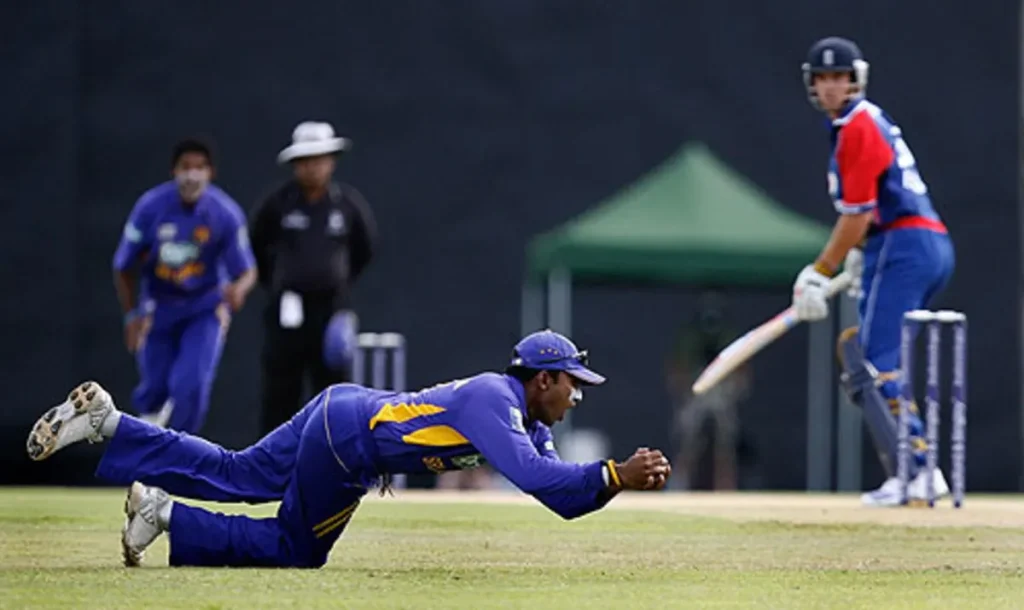
Mahela Jayawardene odi catches
Cricket, Records

Most Catches in ODI Cricket: Top 10 Fielders of All Time

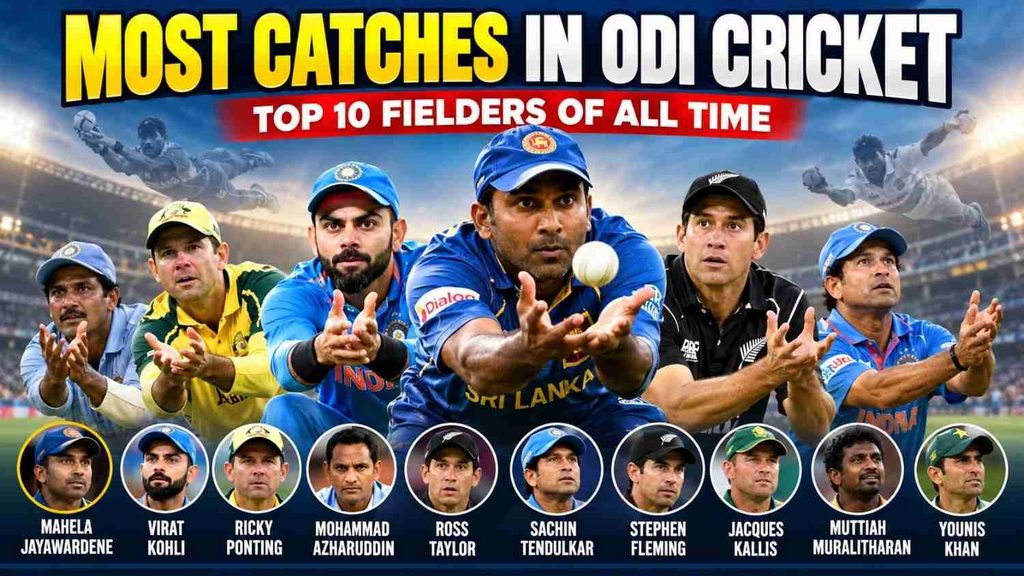
Catching is one of the most important skills in One Day International (ODI) cricket. A brilliant catch can break a dangerous partnership, change the momentum of a match, and help a team defend a challenging total.

Several legendary cricketers have built remarkable records through their fielding. Sri Lanka’s Mahela Jayawardene holds the record for the most catches by a non-wicketkeeper in men’s ODI cricket, while India’s Virat Kohli ranks second on the all-time list.

But who has taken the most catches in ODI cricket? Which players feature among the top 10? Here is a closer look at the leading fielders, their career records, and their contributions to the game.

Most Catches in ODI Cricket: Top 10 Fielders of All Time

most catches in odi

Mahela Jayawardene leads the all-time list with 218 catches in 448 ODI matches. Virat Kohli follows with 170 catches in 317 matches.

Figures from the ACS Online Cricket Records, checked on 27 October 2026, are used throughout this article. The rankings include catches taken by non-wicketkeepers and exclude catches recorded while a player was acting as a wicketkeeper.

No.PlayerTeamODI MatchesOutfield Catches
1Mahela JayawardeneSri Lanka448218
2Virat KohliIndia317170
3Ricky PontingAustralia375160
4Mohammad AzharuddinIndia334156
5Ross TaylorNew Zealand236142
6Sachin TendulkarIndia463140
7Stephen FlemingNew Zealand280133
8Jacques KallisSouth Africa328131
9Muttiah MuralitharanSri Lanka350130
10Younis KhanPakistan262130

Muralitharan and Younis Khan share ninth place because both recorded 130 catches. The table therefore contains 10 players across nine distinct ranking positions. Younis Khan’s figure of 262 represents matches counted in the ACS fielder-record table, which excludes his wicketkeeping appearances.

1. Mahela Jayawardene: 218 Catches

Mahela Jayawardene holds the record for the most catches by a non-wicketkeeper in men’s ODI cricket, with 218 catches in 448 matches.

The former Sri Lankan batter was known for his composure, quick reactions, and awareness in the field. His ability to anticipate shots and judge the flight of the ball helped him convert opportunities into dismissals.

Jayawardene’s record reflects consistency across a long international career. He remains the benchmark for non-wicketkeeper fielders in men’s ODI cricket.

He retired from international cricket in 2015, but his catching record continues to set the benchmark for future generations.

2. Virat Kohli: 170 Catches

Virat Kohli has established himself as one of India’s leading modern fielders. His 170 ODI outfield catches place him second on the all-time list.

Kohli combines athleticism, quick reactions, and anticipation. He has taken catches in the inner circle, at point, in the covers, and in the deep. His energy and commitment in the field also help maintain pressure on opposing batters.

During the 2025 ICC Champions Trophy, Kohli achieved two significant milestones in the same tournament.

On 23 February 2025, against Pakistan in Dubai, he caught Naseem Shah to move past Mohammad Azharuddin’s Indian record of 156 ODI outfield catches. Kohli’s catch of Naseem was his 157th; he subsequently caught Khushdil Shah in the same match for his 158th.

In the semi-final against Australia on 4 March 2025, Kohli caught Nathan Ellis at long-on off Mohammed Shami. His 161st ODI outfield catch took him past Ricky Ponting’s 160 and moved him into second place on the all-time list.

These two milestones in one tournament established Kohli as India’s leading ODI outfield catcher and the second-highest on the overall list.

Unlike several retired players on this list, Kohli remains active in ODI cricket, giving him opportunities to increase his total further.

3. Ricky Ponting: 160 Catches

Former Australian captain Ricky Ponting ranks third with 160 catches in 375 ODI matches.

Ponting was known for his competitive approach to cricket, and his fielding reflected the same intensity. He had quick hands, strong throwing skills, and the ability to react effectively to difficult chances.

His catching record formed part of Australia’s successful era in international cricket. Alongside his batting and captaincy, Ponting’s fielding made him a valuable contributor in important matches.

He retired from international cricket in 2012, leaving behind one of the strongest catching records in ODI history.

4. Mohammad Azharuddin: 156 Catches

Mohammad Azharuddin occupies fourth place with 156 catches in 334 ODI matches.

The former Indian captain was admired for his elegant batting and exceptional wrist work. He was also a capable fielder whose movement and coordination helped him collect catches in different positions.

Azharuddin held India’s record for the most ODI catches by a non-wicketkeeper before Kohli surpassed his total during the 2025 ICC Champions Trophy.

His record remains an important milestone in Indian cricket and highlights the contribution of fielding to the team’s international history.

5. Ross Taylor: 142 Catches

New Zealand’s Ross Taylor recorded 142 catches in 236 ODI matches.

Taylor’s position is notable because he reached his total in fewer matches than several players above him. Alongside his dependable batting, he contributed through his positioning, concentration, and safe hands in the field.

He represented New Zealand across numerous international competitions and was part of teams that consistently challenged strong opponents in major tournaments.

Taylor retired from international cricket in 2022. His 142 catches place him among the most successful non-wicketkeeper fielders in ODI history.

6. Sachin Tendulkar: 140 Catches

Sachin Tendulkar took 140 catches in 463 ODI matches, finishing sixth on the list.

Best remembered for his extraordinary batting career, Tendulkar also made a substantial contribution in the field. His long international career gave him opportunities to take catches across different eras of ODI cricket.

Although he is primarily celebrated for his batting records, his catching total demonstrates another aspect of his contribution to the Indian team.

Tendulkar retired from international cricket in 2013, but his influence on Indian cricket remains significant.

7. Stephen Fleming: 133 Catches

Former New Zealand captain Stephen Fleming recorded 133 catches in 280 ODI matches.

Fleming was known for his tactical intelligence and calm leadership. Anticipating a batter’s shot, reading the situation, and positioning himself effectively were important aspects of his role as a fielder.

He led New Zealand through several international campaigns and made valuable contributions with the bat and in the field.

His 133 catches place him seventh among the leading non-wicketkeeper fielders in ODI cricket.

8. Jacques Kallis: 131 Catches

South African all-rounder Jacques Kallis took 131 catches in 328 ODI matches.

Kallis was one of cricket’s most accomplished all-rounders, contributing with both batting and bowling. His fielding provided another dimension to his overall value to the team.

His coordination, positioning, and ability to field in different areas helped him contribute to dismissals throughout his international career.

Kallis retired from international cricket in 2014 and remains one of South Africa’s most celebrated cricketers.

9. Muttiah Muralitharan: 130 Catches

Muttiah Muralitharan recorded 130 catches in 350 ODI matches, placing him joint ninth on this list.

Primarily remembered as one of the greatest spin bowlers in cricket history, Muralitharan also accumulated a substantial number of catches during his international career.

Bowlers can take catches in the field and sometimes close to the pitch, depending on their fielding position. His total demonstrates that catching contributions are not limited to specialist fielders or top-order batters.

Muralitharan retired from international cricket in 2011 after an outstanding career for Sri Lanka.

10. Younis Khan: 130 Catches

Pakistan’s Younis Khan shares ninth place with Muttiah Muralitharan, having taken 130 catches in 262 matches counted in the ACS fielder-record table.

Younis was an important middle-order batter for Pakistan and also contributed through his fielding. He reached the same career catch total as Muralitharan in fewer matches counted as a non-wicketkeeper fielder.

The figures exclude catches taken while acting as a wicketkeeper, ensuring that his record is compared consistently with those of the other non-wicketkeepers on the list.

Younis retired from international cricket in 2017 after a distinguished career representing Pakistan.

Why Are Outfield Catches Important in ODI Cricket?

Source Image: SportsDunia

Catching is a crucial part of ODI cricket because it converts opportunities created by bowlers into dismissals. A successful catch can change the direction of an innings and influence the result of a match.

Here are three reasons why catching matters in the ODI format.

1. Breaking partnerships

A catch can remove an established batter who is building a partnership. Taking that wicket can expose the opposition’s middle or lower order and change the team’s scoring plans.

2. Creating pressure

Reliable fielding forces batters to think carefully about their shot selection. When fielders consistently take their chances, batters may become more cautious or take additional risks to maintain the scoring rate.

3. Supporting bowlers

A bowler may deliver a good ball that produces an edge or a mistimed shot, but a fielder must complete the catch to turn the opportunity into a dismissal. Reliable catching therefore strengthens a team’s bowling performance.

Modern teams devote considerable time to fielding drills, fitness, reaction training, and positioning. These practices help players improve their chances of taking difficult catches under match pressure.

How Is the ODI Catches Record Calculated?

The statistics in this article refer to catches taken by fielders who are not acting as wicketkeepers. The ACS Online Cricket Records provides the career totals and match figures used for the rankings.

This distinction matters because wicketkeepers accumulate catches through their specialist role behind the stumps. Including wicketkeeping catches would produce a different ranking and would not provide a consistent comparison of non-wicketkeeper fielding records.

Career totals also depend on the number of matches played, the opportunities created by bowlers, and a player’s usual fielding position. Therefore, the highest career total does not automatically mean the highest catching rate per match.

For reliable comparisons, career catches and matches should be considered together, and the same statistical definition should be applied to every player.

Conclusion

Mahela Jayawardene remains the record holder for the most catches by a non-wicketkeeper in men’s ODI cricket, with 218 catches in 448 matches. Virat Kohli follows in second place with 170, ahead of Ricky Ponting and Mohammad Azharuddin.

The list also highlights the contributions of Ross Taylor, Sachin Tendulkar, Stephen Fleming, Jacques Kallis, Muttiah Muralitharan, and Younis Khan. Muralitharan and Younis share ninth place with 130 catches each.

Jayawardene’s achievements extend beyond ODI cricket. With 440 catches across Tests, ODIs and T20Is, he holds the international record for the most catches by a non-wicketkeeper. 

These records demonstrate that catching is far more than a supporting skill in ODI cricket. Reliable fielding can break partnerships, create pressure, and help teams turn bowling opportunities into wickets. The achievements of these players underline the lasting importance of catching in the history of the one-day international format.

Frequently Asked Questions

1. Who has taken the most catches in ODI cricket?

Mahela Jayawardene of Sri Lanka holds the record for the most catches by a non-wicketkeeper in men’s ODI cricket, with 218 catches in 448 matches.

2. How many ODI catches does Virat Kohli have?

Virat Kohli has 170 outfield catches in 317 ODI matches, according to the ACS Online Cricket Records checked on 27 October 2026. His total may increase as he continues playing ODI cricket.

3. Who has the most ODI catches for India?

Virat Kohli holds the Indian record for the most ODI catches by a non-wicketkeeper. He surpassed Mohammad Azharuddin’s 156 catches during the 2025 ICC Champions Trophy.

4. Is Ricky Ponting among the top 10 fielders with the most ODI catches?

Yes. Ricky Ponting ranks third on the all-time list, with 160 catches in 375 ODI matches.

5. Are wicketkeeper catches included in ODI outfield-catching rankings?

No. This article ranks non-wicketkeepers by their catches taken while fielding. Catches recorded while acting as a wicketkeeper are excluded to maintain a consistent comparison.

Most Catches in ODI Cricket: Top 10 Fielders of All Time Read Post »

Kieron Pollard catches
Cricket, Records

Most Catches in T20 Cricket: All-Time and T20I Records

Fielding can change the result of a T20 cricket match in seconds. A spectacular boundary catch, a sharp effort at point or a safe pair of hands in the deep can dismiss a dangerous batter and shift momentum towards the bowling side.

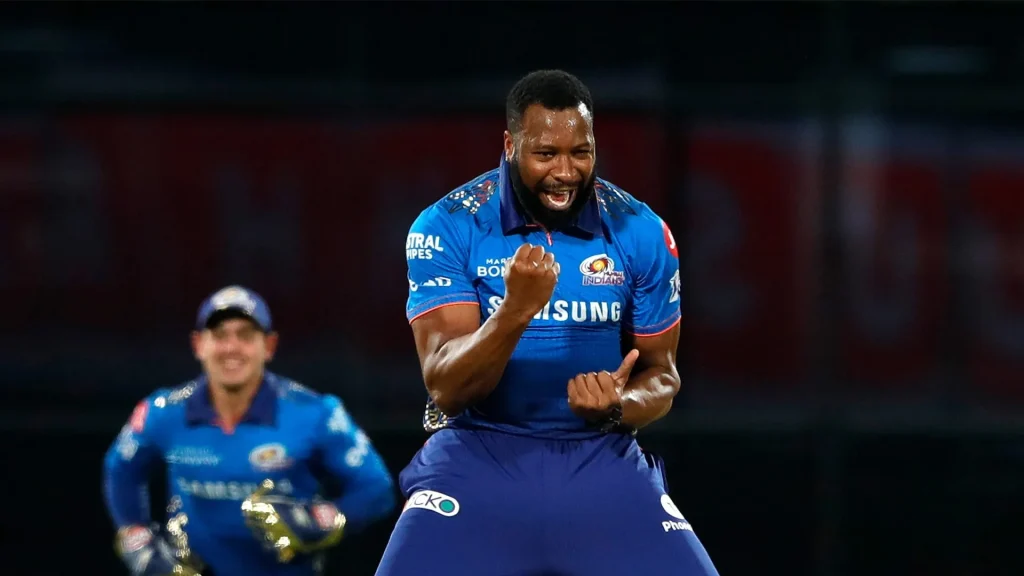
Kieron Pollard made T20 cricket history during the 2025 Caribbean Premier League (CPL) final at Providence Stadium, Guyana, when he became the first player to reach 400 catches in the format. Playing for Trinbago Knight Riders against Guyana Amazon Warriors, Pollard took four catches, with the dismissal of Dwaine Pretorius marking his 400th. He finished the match with 401 career T20 catches, according to contemporary reports. The overall men’s T20 fielding records subsequently listed him with 414 catches in the table last updated on 10 September 2026.

This article covers the leading catch-takers in overall men’s T20 cricket, the top fielders in T20 Internationals (T20Is), wicketkeeping records and the importance of fielding in the shortest format.

Who Has Taken the Most Catches in T20 Cricket?

most catches in t20

Kieron Pollard holds the leading position in the published overall men’s T20 fielding records, with 414 catches. South African batter David Miller follows with 346, while Australian all-rounder Glenn Maxwell has 280.

These figures come from the List of Twenty20 cricket records, specifically its career fielding section. The table was last updated on 10 September 2026 and excludes catches taken as a wicketkeeper.

Pollard’s achievement of reaching 400 catches in the 2025 CPL final demonstrated his longevity and consistency across international and franchise cricket. His record-breaking milestone remains a significant moment in T20 fielding history.

Most Catches in T20 Cricket: Top Five Players

The following table presents the leading players in the published overall men’s T20 fielding records. It covers recognised domestic competitions, franchise leagues and international matches within the source’s records.

RankPlayerTeam associationCatches
1Kieron PollardWest Indies414
2David MillerSouth Africa346
3Glenn MaxwellAustralia280
4James VinceEngland276
5Dwayne BravoWest Indies275

1. Kieron Pollard

Kieron Pollard leads the published overall T20 fielding list with 414 catches. The former West Indies international built his reputation through powerful batting, useful medium-pace bowling and dependable fielding.

Pollard played for several international and franchise teams, including Mumbai Indians in the Indian Premier League and teams in the Caribbean Premier League. His experience in high-pressure matches gave him many opportunities to contribute in the field.

His 400th T20 catch came during the 2025 CPL final against Guyana Amazon Warriors. He took four catches in the match, including those of Quentin Sampson, Shimron Hetmyer, Iftikhar Ahmed and Dwaine Pretorius. The dismissal of Pretorius marked the historic milestone.

His record reflects both longevity and consistency. In a format where batters frequently attack from the start, reliable catching can be just as important as scoring runs or taking wickets.

2. David Miller

David Miller ranks second in the published overall T20 fielding records with 346 catches. The South African left-handed batter has played international cricket and appeared in several major franchise competitions.

Miller is widely recognised for his finishing ability, but his fielding is another important part of his contribution. Players stationed in the outfield must judge the ball’s trajectory, move quickly and maintain concentration under pressure.

His overall T20 tally places him among the most successful non-wicketkeeper fielders in the format. He also leads the men’s T20I non-wicketkeeper fielding list with 86 catches.

3. Glenn Maxwell

Australia’s Glenn Maxwell is an accomplished white-ball all-rounder who has represented his country in international cricket and played in major T20 leagues around the world, including the Big Bash League and the Indian Premier League.

Known for his athleticism and quick reactions, Maxwell can field in different positions, both close to the batter and in the outfield. Alongside his fielding skills, he is recognised for his explosive batting and useful off-spin bowling.

Maxwell retired from One Day Internationals in June 2025 but continues to play T20 Internationals. He also withdrew from the IPL 2026 auction. His career highlights his contribution to T20 cricket through batting, bowling and fielding.

4. James Vince

England’s James Vince occupies fourth place with 276 catches. He has played domestic T20 cricket, franchise competitions and international cricket.

Vince’s long career across different teams has contributed to his high catch total. His position among the leading fielders illustrates how players who remain regular selections across multiple seasons can build impressive career records.

Consistent fielding requires concentration throughout an innings, particularly when batters target the boundary and create difficult catching opportunities.

5. Dwayne Bravo

Dwayne Bravo completes the published top five with 275 catches. The former West Indies all-rounder enjoyed a successful career in international cricket and franchise tournaments.

Bravo became well known for his death bowling and variations, particularly in the IPL and Caribbean Premier League. His fielding record adds another dimension to his achievements.

Although he has retired from professional playing duties, his career numbers remain an important benchmark for future T20 players.

Most Catches in T20 Internationals

Overall T20 records include domestic and franchise matches, while T20 International records cover matches recognised as men’s T20 internationals.

The distinction matters because the leading player in one category may not lead the other. A player can accumulate hundreds of catches across franchise leagues without recording the same total in international cricket.

According to the List of Twenty20 International records, David Miller leads non-wicketkeeper fielders with 86 catches. Afghanistan’s Mohammad Nabi follows with 83, while Malaysia’s Sharvin Muniandy has 80.

Most Catches in T20I Cricket: Top Five

RankFielderTeamCatchesInnings
1David MillerSouth Africa86139
2Mohammad NabiAfghanistan83155
3Sharvin MuniandyMalaysia80128
4George DockrellIreland77156
5Muhammad WaseemUnited Arab Emirates7699

The innings figures provide additional context when comparing these players. Muhammad Waseem has 76 catches in 99 innings, while George Dockrell has 77 in 156 innings. Their career totals are close, but Waseem’s catches-per-innings rate is higher.

David Miller Leads the T20I Fielding List

David Miller’s 86 T20I catches put him ahead of the other listed fielders. His position in both the overall T20 and T20I rankings highlights his consistency across different levels of the game.

Mohammad Nabi and George Dockrell have also made significant contributions to their respective national sides. Sharvin Muniandy and Muhammad Waseem demonstrate that outstanding fielding records are not limited to the traditionally dominant cricket nations.

These figures count catches as a non-wicketkeeper fielder. They should not be confused with wicketkeeping catches or total dismissals.

What About Wicketkeepers?

Most Catches in T20 Cricket

Wicketkeepers have a specialised role in cricket. They take catches behind the stumps and can also dismiss batters through stumpings. Their records are therefore often listed separately from those of other fielders.

The overall T20 fielding table used in this article excludes catches taken while keeping wicket. This distinction explains why some lists that combine fielding and wicketkeeping statistics show different rankings.

For example, wicketkeepers such as Jos Buttler and Quinton de Kock have accumulated substantial numbers of catches in T20 cricket. However, many of their catches were taken as designated wicketkeepers. Their combined role-based totals should not be compared directly with the non-wicketkeeper fielding figures in the top-five table.

Published men’s T20I wicketkeeping records separately list Quinton de Kock with 98 catches and 19 stumpings, giving him 117 dismissals in total. England’s Jos Buttler has 87 wicketkeeping catches and 22 stumpings in the same record table.

WicketkeeperCatchesStumpingsTotal dismissals
Quinton de Kock9819117
Jos Buttler8722109

These figures should not be added directly to the non-wicketkeeper fielding table. Doing so would combine different statistical categories.

When comparing players, check whether a record covers all recognised T20 competitions or only T20 Internationals, and whether it includes catches taken while keeping wicket.

Why Are Catches Important in T20 Cricket?

T20 cricket gives fielders limited time to influence a match, but every successful catch can be decisive. With only 20 overs per innings, one dismissal can alter the batting team’s strategy and the match’s momentum.

1. Breaking partnerships

A catch can dismiss a settled batter before a partnership becomes difficult to contain. Removing one of the established batters can disrupt communication and force a new player to settle at the crease.

2. Controlling the scoring rate

Powerful batters often target boundaries to increase the scoring rate. Catching one of them can force the incoming batter to take time to settle, allowing the bowling side to regain control.

3. Supporting bowlers

A good catch rewards accurate bowling and helps a team defend a total or restrict a chase. Bowlers create opportunities through variations in pace, line and length, but fielders must complete the dismissal.

4. Creating momentum

A spectacular catch can energise the fielding side and put pressure on the batting team. Such moments can influence the atmosphere, confidence and approach of both teams.

5. Improving team balance

Reliable fielders give captains more flexibility when setting attacking fields and choosing bowling plans. Players who can save runs and take difficult catches are valuable even when they are not contributing heavily with the bat.

In modern T20 cricket, teams assess fielding alongside batting and bowling. A player who saves runs and converts difficult chances can make a major contribution without scoring many runs.

How Are Career Catch Records Calculated?

Career catch totals count catches credited to a player across the competitions covered by the relevant statistical source. The scope of the record is important when comparing players.

For overall T20 cricket, the published career table includes domestic and franchise T20 matches as well as international matches. T20I records count only international matches in the format.

A catch taken while a player is acting as the designated wicketkeeper may appear in a separate wicketkeeping record rather than the ordinary fielding list. Consequently, a player’s non-wicketkeeper catch total can differ from their total catches across all roles.

Statistics can also change when active players take additional catches or when historical records are updated. Always check the source’s update date and definitions before publishing a record as current.

Conclusion

Kieron Pollard leads the published overall men’s T20 fielding records with 414 catches, followed by David Miller with 346. Glenn Maxwell, James Vince and Dwayne Bravo complete the top five in the record table last updated on 10 September 2026.

In T20 Internationals, David Miller leads the non-wicketkeeper fielding list with 86 catches, followed by Mohammad Nabi with 83 and Sharvin Muniandy with 80. George Dockrell has 77 catches, while Muhammad Waseem has 76 in fewer innings.

These records demonstrate the value of consistency, concentration and athleticism in the shortest format. Because career totals can change and statistical categories differ, readers should check the linked record tables and confirm whether wicketkeeping catches are included before comparing figures.

Frequently Asked Questions

1. Who has taken the most catches in T20 cricket?

Kieron Pollard leads the published overall men’s T20 fielding records with 414 catches. The record table was last updated on 10 September 2026 and excludes catches taken as a wicketkeeper.

2. Who has taken the most catches in T20 Internationals?

David Miller leads the cited men’s T20I fielding records with 86 catches as a non-wicketkeeper fielder. He is followed by Mohammad Nabi with 83 catches and Sharvin Muniandy with 80. The table was last updated on 14 October 2026.

3. How many catches has David Miller taken in T20 cricket?

The published overall men’s T20 career table lists David Miller with 346 catches, while the cited men’s T20I fielding table lists 86 catches. These figures cover different competition scopes and should not be added together.

4. Are wicketkeeper catches included in the most-catches-in-T20 records?

Not in the non-wicketkeeper fielding tables used in this article. Wicketkeeping catches and stumpings are recorded separately in the relevant wicketkeeping tables.

5. Why do different websites show different T20 catch records?

Websites may use different update dates, competition coverage and statistical definitions. Some include all recognised T20 competitions, while others cover only T20 Internationals. Some also separate wicketkeeping catches from ordinary fielding catches. Always check the source and its definitions before comparing totals.

Most Catches in T20 Cricket: All-Time and T20I Records Read Post »

Stumped on a Free Hit
Cricket, Guide

Can You Be Stumped on a Free Hit? The Rule Explained

A free hit gives a batter an opportunity to attack without worrying about most conventional dismissals. Yet one question often confuses cricket fans: Can you be stumped on a free hit?

The answer is no. Under the ICC Men’s ODI and T20I playing conditions, a batter cannot be dismissed stumped on a free hit. Even if the batter steps out of the crease, misses the ball and the wicketkeeper removes the bails, stumping is not a permitted method of dismissal.

However, a free hit does not make the batter completely safe. Run out, hitting the ball twice and obstructing the field remain possible methods of dismissal.

What Is a Free Hit in Cricket?

is stumping out on free hit

A free hit is a delivery awarded after a no-ball in limited-overs cricket. Under Clause 21.19 of the ICC playing conditions, the delivery following a no-ball is a free hit.

The batter is protected from most conventional dismissals, including bowled, caught, LBW, stumped and hit wicket. If the free-hit delivery is itself a no-ball or a wide, the next delivery is also a free hit.

Can You Be Stumped on a Free Hit?

No, a batter cannot be dismissed stumped on a free hit.

Under Clause 21.19.2 of the ICC Men’s ODI and T20I playing conditions, the striker can be dismissed only in circumstances that apply to a no-ball, even if the free-hit delivery is called wide.

The three permitted methods of dismissal are:

  • Run out
  • Hitting the ball twice
  • Obstructing the field

Stumping is not included in this list.

Consider the following example.

A spinner delivers a free hit. The batter advances down the pitch to hit the ball over the boundary but misses it. The wicketkeeper collects the ball and breaks the stumps while the batter remains outside the crease.

On a normal legal delivery, the batter could be dismissed stumped if the requirements of the stumping law were satisfied. On a free hit, however, the batter cannot be given out stumped.

The wicketkeeper may remove the bails, but that action does not make the batter out under the stumping law. Leaving the crease does not automatically result in a dismissal.

Why Is Stumping Not Allowed on a Free Hit?

Clause 21.18 of the ICC Men’s ODI playing conditions states that, when a no-ball has been called, neither batter can be dismissed except through hitting the ball twice, obstructing the field or run out. Clause 21.19 extends these restrictions to a free hit.

Under the ordinary stumping law, the striker can be dismissed stumped when the delivery is not a no-ball, the striker is outside their ground, no run is being attempted, and the wicketkeeper fairly breaks the wicket without the intervention of another fielder.

However, stumping is not one of the permitted dismissals on a free hit. The wicketkeeper therefore cannot use the ordinary stumping rule to dismiss the striker on that delivery.

This protection does not remove every risk associated with playing the ball. A batter can still be dismissed through the three methods permitted under the free-hit rule.

Which Dismissals Are Allowed on a Free Hit?

The free-hit rule permits three methods of dismissal. The following table summarises which dismissals are allowed under the ICC ODI and T20I playing conditions.

Dismissal methodAllowed on a free hit?Explanation
BowledNoThe batter cannot be dismissed bowled off the free-hit delivery.
CaughtNoA catch does not dismiss the batter on a free hit.
LBWNoThe batter cannot be given out leg before wicket.
StumpedNoStumping is not a permitted method of dismissal.
Hit wicketNoThe batter cannot be dismissed hit wicket off the free-hit delivery.
Run outYesA batter can be run out when the Run Out law permits the dismissal.
Hitting the ball twiceYesThe batter can be dismissed under the relevant law.
Obstructing the fieldYesThe batter can be dismissed if their actions meet the requirements of the law.

The table concerns dismissals of the striker off the free-hit delivery. The non-striker can also be run out when the Run Out law permits the dismissal.

Can a Batter Be Run Out on a Free Hit?

Stumped on a Free Hit

Yes. A batter can be run out on a free hit when the requirements of the Run Out law are satisfied.

A free hit does not protect a batter who is attempting a run and fails to make their ground.

Imagine that the batter hits the ball towards a fielder and attempts a quick single. The fielder throws the ball towards the wicketkeeper, who breaks the stumps before the batter makes their ground.

If the requirements of the Run Out law are satisfied, the batter can be given out. The crucial distinction is the method of dismissal: stumping is not permitted on a free hit, but a valid run out remains possible.

Can the Wicketkeeper Run Out a Batter on a Free Hit?

Yes, a wicketkeeper can run out a batter on a free hit when the Run Out law permits the dismissal. There are three important situations.

1. The Batter Is Attempting a Run

Yes, the batter can be run out.

If the batter attempts a run and fails to make their ground before the wicketkeeper fairly breaks the wicket, the batter can be given out run out, provided the requirements of the law are satisfied.

2. Another Fielder Is Involved

Yes, a run out may be possible.

If another fielder intervenes before the wicketkeeper breaks the wicket, the specific exception in Clause 38.2.2.2 does not apply. A run out may be valid if the other requirements of the law are satisfied.

3. The Batter Is Not Running and the Wicketkeeper Acts Alone

No, the batter is not out run out.

Clause 38.2.2.2 states that the striker is not out run out when a no-ball has been called, the striker is outside their ground and is not attempting a run, and the wicketkeeper alone fairly puts down the wicket without the intervention of another fielder.

On a free hit, a batter who wanders down the pitch, is not attempting a run and has the bails removed by the wicketkeeper alone is not out at all.

The batter cannot be given out stumped because the free-hit rule prohibits that dismissal. The batter also cannot be given out run out because Clause 38.2.2.2 specifically protects them in these circumstances. The MCC’s worked ruling on this scenario reaches both conclusions.

Can You Be Stumped on a Free Hit If the Ball Is Wide?

No. A wide call on a free hit does not make stumping possible.

Under Clause 21.19.2 of the ICC Men’s ODI and T20I playing conditions, the striker can be dismissed only in circumstances that apply to a no-ball, even when the free-hit delivery is called wide.

Suppose the bowler delivers the free hit well outside the batter’s reach. The batter moves down the pitch, misses the ball, and the wicketkeeper breaks the stumps.

The striker cannot be dismissed stumped. Under Clause 21.19.1, a wide on a free-hit delivery means that the next delivery is also a free hit.

What Happens If the Batter Is Bowled on a Free Hit?

The batter is not out bowled if the ball hits the stumps on a free hit. The ball can remain in play, allowing the batting side to score runs.

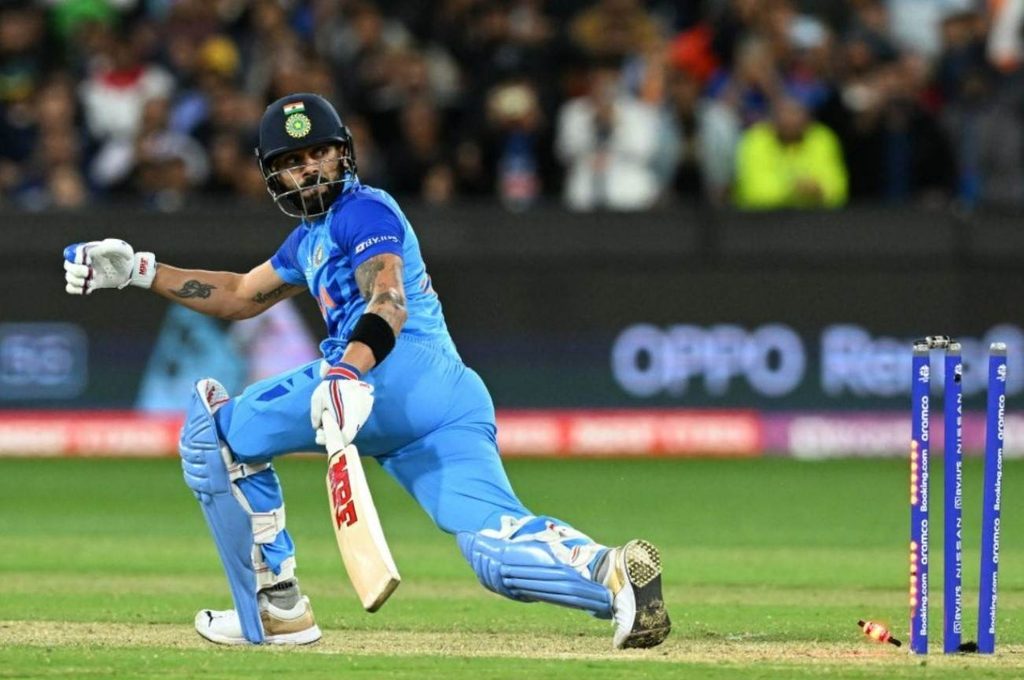
A famous example occurred during the 2022 ICC Men’s T20 World Cup match between India and Pakistan at the Melbourne Cricket Ground on 23 October 2022.

Virat Kohli was bowled by Mohammad Nawaz on a free hit. The ball deflected off the stumps and ran away, allowing Kohli and Dinesh Karthik to complete three byes. India won the match by four wickets.

The incident demonstrated why a batter can survive a delivery that would normally result in a bowled dismissal.

Why Kohli Was Safe From Both Bowled and Run Out

Kohli could not be dismissed bowled because bowled is not a permitted method of dismissal on a free hit.

Clause 38.2.1.2 also states that the striker is not out run out if the ball delivered by the bowler has not touched a fielder before the wicket is fairly broken. In Kohli’s incident, the ball hit the stumps without first touching a fielder. He was therefore safe from both bowled and run out.

How Are Runs Scored When the Ball Hits the Stumps on a Free Hit?

The ICC changed its playing conditions effective from 1 June 2023. Under the revised rule, runs scored off a free hit when the ball hits the stumps count as team runs.

Kohli’s three byes occurred in October 2022, before this change took effect. The incident must therefore be described under the scoring rules that applied at the time. The revised rule applies to matches played under the updated conditions; it does not mean those runs are credited to the batter’s individual score.

Conclusion

A batter cannot be stumped on a free hit because the free-hit rule restricts dismissals to those permitted following a no-ball. Stumping, bowled, caught, LBW and hit wicket are not permitted methods of dismissal on that delivery.

However, a batter can still be dismissed run out, for hitting the ball twice or for obstructing the field.

Under Clause 38.2.2.2, a striker who is outside their ground, is not attempting a run and has the wicket broken by the wicketkeeper alone after a no-ball has been called is not out run out. The batter cannot be stumped either, so they remain not out.

Clause 38.2.1.2 also protects the striker from a run-out dismissal when the delivery itself breaks the wicket without first touching a fielder.

The key point is simple: on a free hit, a batter cannot be stumped, and in the specific circumstances covered by Clause 38.2.2.2, the batter cannot be given out run out either.

Frequently Asked Questions

1. Can you be stumped out on a free hit in cricket?

No. Stumping is not one of the permitted methods of dismissal on a free hit. Even if the batter leaves the crease and the wicketkeeper breaks the stumps, the batter cannot be given out stumped.

2. Can you be run out on a free hit?

Yes. Run out is one of the three permitted methods of dismissal on a free hit. The dismissal must satisfy the Run Out law, including its specific exceptions.

3. Can a batter be caught out on a free hit?

No. A batter cannot be dismissed caught off a free-hit delivery. If the batter hits the ball into the air and a fielder catches it, the batter remains not out under the free-hit rule.

4. Can you be out LBW on a free hit?

No. LBW is not a permitted dismissal on a free hit. The batter cannot be given out LBW even if the delivery appears to satisfy the usual requirements of the LBW law.

5. Does a wide on a free hit give another free hit?

Yes. Under Clause 21.19.1, if a free-hit delivery is called wide, the next delivery is also a free hit.

Can You Be Stumped on a Free Hit? The Rule Explained Read Post »

Timed Out in Cricket
Cricket, Guide

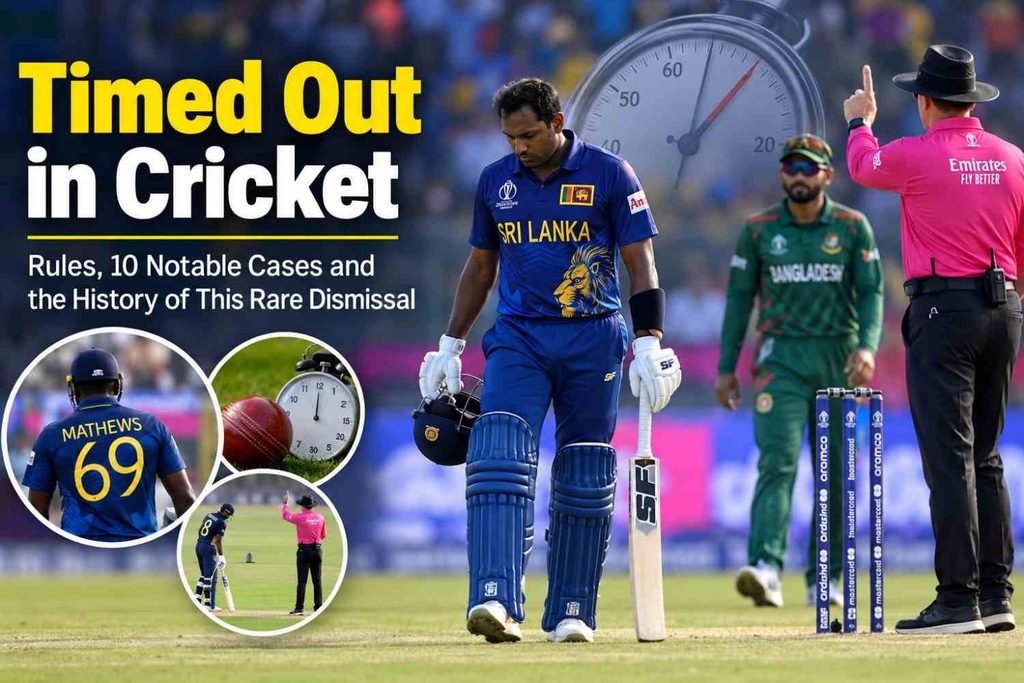
Timed Out in Cricket: Rules, 10 Notable Cases and the History of This Rare Dismissal

Timed out in cricket is one of the rarest ways a batter can lose a wicket. Unlike bowled, caught or LBW, this dismissal can happen before a batter faces a single delivery. The rule requires an incoming batter to be ready within a specified time after the previous wicket falls or a batter retires.

Sri Lanka’s Angelo Mathews made international cricket history when Bangladesh dismissed him timed out during the 2023 Cricket World Cup. He became the first batter to be dismissed this way in international cricket. In June 2026, Bhutan’s Ritshi Choden became the first woman to be dismissed by time-out in international cricket.

Several domestic players had experienced the same dismissal over the preceding decades. Their cases show how delays between wickets can lead to unusual outcomes.

This overview explains the timed-out rule in cricket, the official time limits, 10 notable documented cases and the history behind these rare dismissals.

What Is Timed Out in Cricket?

timed out in cricket

Timed out is a method of dismissal under Law 40 of the Marylebone Cricket Club (MCC) Laws of Cricket.

A batter can be dismissed timed out if, after a wicket falls or a batter retires, the incoming batter is not ready to receive the next ball—or the other batter is not ready to receive it—within the applicable time limit.

The MCC Laws of Cricket 2017 Code, Fourth Edition, took effect on 1 October 2026. Under Law 40.1.1, the standard three-minute limit remains unchanged. However, competitions may specify shorter limits through their playing conditions.

For example, the ICC Men’s Cricket World Cup 2023 allowed two minutes, while applicable ICC T20 International playing conditions can specify a 90-second limit. The rules for the particular competition determine which time limit applies.

Simply arriving at the crease does not necessarily satisfy the rule. The incoming batter must be ready to receive the ball within the required period.

The fielding side must appeal before the umpires can give the batter out timed out.

Key fact: A batter can be dismissed timed out without facing a delivery, and the bowler receives no credit for the wicket.

What Is the Timed Out Rule in Cricket?

The timed-out rule prevents unnecessary delays when a new batter enters the field. It helps ensure that matches continue without excessive interruptions between dismissals.

Under Law 40, the requirement applies when a batter is dismissed or retires and another batter must be ready for the next delivery.

How Does a Timed-Out Dismissal Work?

  1. A wicket falls, or a batter retires.
  2. The incoming batter must be ready to receive the ball, or the other batter must be ready to receive it, within the applicable time limit.
  3. If the requirement is not met, the fielding side can appeal.
  4. The umpires assess the appeal under the relevant Laws and playing conditions.
  5. If the appeal is upheld, the incoming batter is dismissed timed out.

A batter is not automatically given out when the time limit expires. An appeal is required, and the umpires determine whether the dismissal is valid.

How Much Time Does a Batter Get in Cricket?

The permitted time depends on the Laws and playing conditions governing the match.

Rules or competitionTime allowed
Standard MCC LawsThree minutes
ICC Men’s Cricket World Cup 2023Two minutes
Applicable ICC T20I playing conditions90 seconds
Other domestic and international competitionsAs specified in their playing conditions

The MCC Laws of Cricket 2017 Code, Fourth Edition, took effect on 1 October 2026. Law 40.1.1 retains the standard three-minute limit. International tournaments and other competitions can apply different limits.

For this reason, players must follow the playing conditions for their specific match rather than assume that every cricket format uses the same deadline.

Timed Out in Cricket: List of 10 Notable Cases

Timed-out dismissals have remained extremely uncommon throughout cricket history.

Wisden’s published list records nine men’s professional timed-out dismissals. In June 2026, Bhutan’s Ritshi Choden became the first woman to be dismissed timed out in international cricket.

The following combines those nine men’s professional cases with Choden’s historic women’s international dismissal. These are 10 notable documented cases, not a complete count of every timed-out dismissal in cricket history.

No.PlayerTeamOpponentSeason or year
1Andrew JordaanEastern ProvinceTransvaal1987–88
2Hemulal YadavTripuraOrissa1997–98
3Vasbert DrakesBorderFree State2002–03
4Andrew HarrisNottinghamshireDurham UCCE2003
5Ryan AustinCombined Campuses and CollegesWindward Islands2013–14
6Charles KunjeMatabeleland TuskersMountaineers2017–18
7Angelo MathewsSri LankaBangladesh2023
8Godfred BakiweyemGhanaSierra Leone2023–24
9Saud ShakeelState Bank of PakistanPakistan Television2024–25
10Ritshi ChodenBhutan WomenNepal Women2026

1. Andrew Jordaan: The First Recorded Men’s Professional Case

Andrew Jordaan of Eastern Province was dismissed timed out against Transvaal during the 1987–88 South African domestic cricket season.

His dismissal is the earliest entry in Wisden’s documented list of men’s professional timed-out cases.

Jordaan had been not out overnight, but heavy rain and flooded streets delayed his journey to the ground the following morning. His dismissal remains an early example of this unusual mode of losing a wicket.

2. Hemulal Yadav: The Indian Domestic Cricket Case

Hemulal Yadav was dismissed timed out while representing Tripura against Orissa during the 1997–98 Ranji Trophy season.

According to historical accounts reported by Wisden, Yadav was talking with his team manager instead of making his way to the crease after a wicket fell.

The delay resulted in a timed-out dismissal.

Yadav’s case is one of the best-known examples of this dismissal in Indian domestic cricket. It illustrates how a batter’s failure to be ready within the required period can lead to a wicket even without a delivery being bowled.

3. Vasbert Drakes: The Batter Delayed by a Flight

West Indies cricketer Vasbert Drakes was dismissed timed out while representing Border against Free State during the 2002–03 South African domestic season.

Drakes was unable to reach the ground in time because of a delayed flight. Historical reporting indicates that he was still on another continent when he was ruled out.

The opposition appealed, and the dismissal was recorded as timed out.

His case is unusual because the delay was connected to travel rather than an incident at the crease.

It demonstrates that the rule can have consequences even when a batter’s absence is caused by circumstances beyond the immediate action on the field.

4. Andrew Harris: The Nottinghamshire Case

Andrew Harris was dismissed timed out while representing Nottinghamshire against Durham UCCE in 2003.

Harris had suffered a groin injury while bowling and was changing out of his tracksuit when the previous wicket fell. He tried to get ready and reach the crease quickly, but could not move fast enough and was declared timed out.

His case remains notable because timed-out dismissals were exceptionally uncommon in English professional cricket.

The incident also demonstrates that the same timing requirement can apply in domestic matches, subject to the playing conditions in force.

5. Ryan Austin: The West Indies Domestic Case

Ryan Austin was dismissed timed out while playing for Combined Campuses and Colleges against the Windward Islands during the 2013–14 season.

The dismissal is included among the documented men’s professional cases.

Published accounts do not establish a confirmed reason for Austin’s delay. He failed to appear in time to bat in the second innings, although he later took the field to bowl.

His dismissal remains an example of the timed-out rule being applied in West Indies domestic cricket.

6. Charles Kunje: The Zimbabwean Domestic Case

Charles Kunje was dismissed timed out while representing Matabeleland Tuskers against Mountaineers during the 2017–18 Zimbabwean domestic season.

His name appears in the documented list of men’s professional timed-out dismissals.

The reason for Kunje’s delay remains unclear in published reports. The dismissal came during a difficult match for Matabeleland Tuskers, who were bowled out for 68 before Mountaineers won by 10 wickets.

Although Kunje’s dismissal received considerably less attention than Angelo Mathews’ later international incident, it remains part of the recorded history of this rare dismissal.

7. Angelo Mathews: The First Timed-Out Dismissal in International Cricket

Angelo Mathews became the first batter to be dismissed timed out in international cricket during the ICC Men’s Cricket World Cup match between Sri Lanka and Bangladesh at the Arun Jaitley Stadium in Delhi on 6 November 2023.

The incident occurred after Bangladesh dismissed Sri Lankan batter Sadeera Samarawickrama.

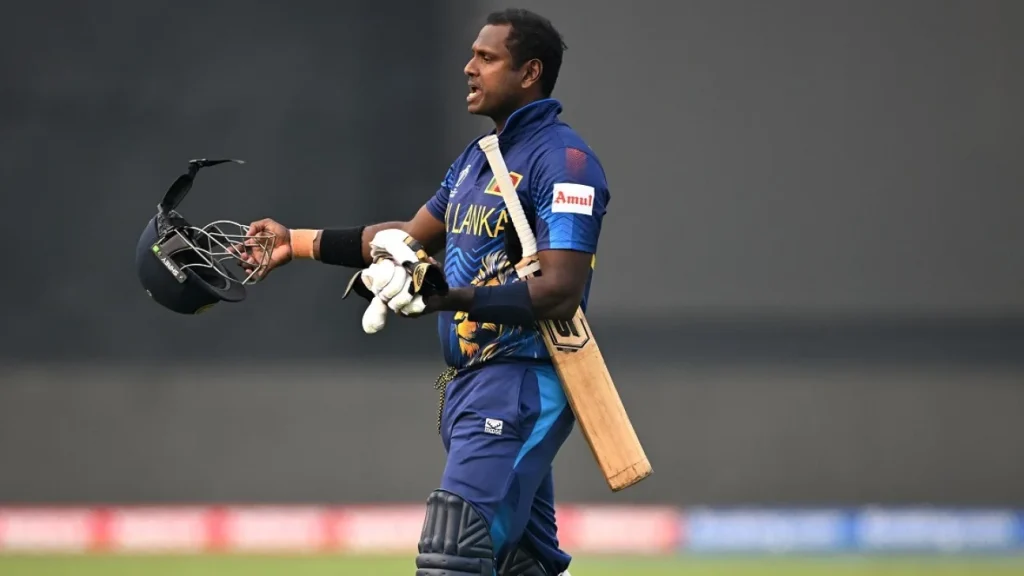
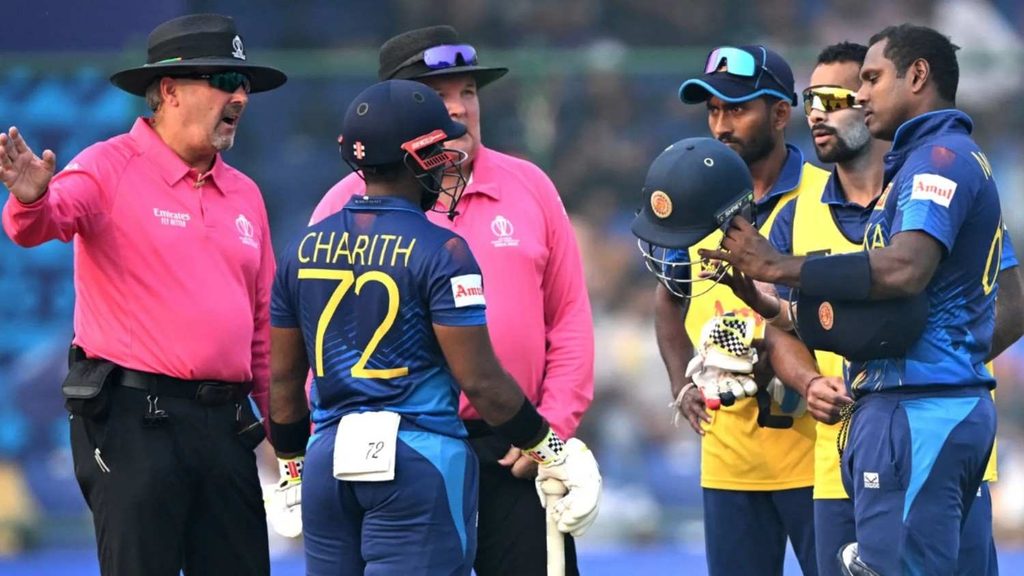
Mathews walked out to bat but encountered a problem with his helmet strap before facing his first delivery. He requested a replacement helmet, which contributed to the controversy surrounding the delay.

Bangladesh captain Shakib Al Hasan appealed to on-field umpire Marais Erasmus for timed out under Law 40.1.1 and the tournament’s two-minute requirement.

Fourth umpire Adrian Holdstock later explained that Mathews had already exceeded the permitted time before the helmet strap issue occurred: “the batter wasn’t ready to receive the ball within those two minutes, even before the strap became an issue for him.”

Mathews challenged that account, posting time-stamped video screenshots and arguing that he had five seconds left when the strap broke. He called Shakib “a cheat,” demanded “justice” from the ICC, threw his helmet and bat at the boundary, and described the incident as “disgraceful.”

Why Was Angelo Mathews’ Dismissal Controversial?

The decision triggered a major debate about the difference between following cricket’s playing conditions and respecting the spirit of the game. Mathews argued that the time-stamped footage supported his claim that he had five seconds remaining, directly contradicting Holdstock’s explanation that he was already late before the helmet strap broke.

Shakib later explained: “One of our fielders came to me and said if you appeal now he will be out.”

The umpires asked whether he wanted to continue with the appeal, and he declined to withdraw it.

Bangladesh won the match by three wickets, with Shakib named Player of the Match after scoring 82 runs and taking two wickets. When Mathews later had Shakib caught, he tapped an imaginary wristwatch.

The incident became one of the most discussed moments of the 2023 Cricket World Cup. Mathews lost his wicket without facing a delivery, becoming the first batter to suffer this dismissal in international cricket.

8. Godfred Bakiweyem: The Ghanaian T20 Cricket Case

Godfred Bakiweyem of Ghana was dismissed timed out against Sierra Leone during the 2023–24 season.

The incident is included in Wisden’s documented list of men’s professional timed-out dismissals and is identified as the first such dismissal in T20 cricket.

Bakiweyem did not meet the applicable timing requirement, resulting in his dismissal.

His case demonstrated that timed out was not restricted to first-class cricket or longer formats.

The incident is especially notable because shorter-format cricket places greater emphasis on maintaining the pace of play.

Bakiweyem’s dismissal remains an important entry in the history of timed-out dismissals in men’s T20 cricket.

9. Saud Shakeel: The Pakistan Domestic Cricket Case

Pakistan batter Saud Shakeel was dismissed timed out while representing State Bank of Pakistan against Pakistan Television during the 2024–25 domestic first-class season.

His dismissal occurred during an extraordinary sequence in which State Bank of Pakistan lost four wickets in three balls.

After the preceding dismissal, Shakeel did not become ready to bat within the required period. Reports indicate that he took approximately four minutes to emerge, leading to an appeal from the opposition.

The umpires upheld the appeal, and Shakeel was recorded as timed out.

A match official said Shakeel reached the crease after the three-minute limit. Reports suggested that he had been waiting for his turn to bat and may have dozed off during the unusually late, floodlit final played during Ramadan. The suggestion that he had fallen asleep was not established as a confirmed explanation.

His dismissal became the latest entry in Wisden’s published list of nine men’s professional timed-out cases.

The incident demonstrated that even experienced international cricketers can be affected by the timing requirement during domestic matches.

10. Ritshi Choden: The First Woman Timed Out in International Cricket

Bhutan’s Ritshi Choden became the first woman to be dismissed timed out in international cricket during a match against Nepal Women on 4 June 2026.

The incident occurred during the ACC Women’s Premier Cup at the Kolej Tuanku Jaafar Cricket Oval in Mantin, Malaysia.

Nepal Women scored 113 runs in 20 overs before Bhutan began their chase.

On the first ball of Bhutan’s innings, opener Ngawang Choden was bowled for a golden duck by Kabita Kunwar.

Ritshi Choden was due to bat at No. 3 but was not ready within the applicable time limit. Reports of the match described a two-minute deadline for the incoming batter.

Bhutan were 0 for 2 after a single delivery. Nepal appealed for timed out, and the umpires Ankita Guha and Sun Meng Yao upheld the appeal. Nepal fielder Puja Mahato went to the umpire and began celebrating. Ritshi Choden arrived carrying her helmet and gloves, spoke briefly with the umpire, and left without protest. She was dismissed for zero without facing a delivery.

Bhutan eventually finished on 62/8 in 20 overs, losing the match by 51 runs while chasing 114.

Why Was Ritshi Choden’s Dismissal Significant?

Choden’s dismissal marked the first recorded instance of a woman being given out timed out in international cricket.

The incident attracted attention because it occurred at the beginning of Bhutan’s innings, immediately after the first delivery.

It also generated discussion about sportsmanship and the use of the timed-out rule.

Following the match, the Cricket Association of Nepal (CAN) apologised, stating:

“While the dismissal was effected within the laws of cricket, we recognise that the spirit of the game extends beyond the written laws and must remain central to our conduct at all times.”

CAN also apologised to Bhutan Cricket, the player concerned and other stakeholders, reaffirming its commitment to sportsmanship, mutual respect and fair play.

Choden’s case remains a milestone in women’s international cricket and demonstrates that the timed-out rule applies across men’s and women’s competitions.

Can a Bowler Get Credit for a Timed-Out Wicket?

timed out in cricket

No. A bowler does not receive credit when a batter is dismissed timed out.

Under Law 40.2 of the MCC Laws of Cricket, the dismissal is recorded against the batter, but no wicket is credited to the bowler.

This differs from dismissals such as bowled, caught, LBW and stumped, which can count towards a bowler’s individual wicket tally.

For example, Angelo Mathews was dismissed timed out against Bangladesh in the 2023 World Cup, but no Bangladesh bowler received credit for his wicket.

The dismissal affects the batting team’s score and wicket count without increasing any bowler’s individual tally.

Can a Batter Be Timed Out in Test, ODI and T20 Cricket?

Yes. A batter can be dismissed timed out in Test, ODI and T20 cricket, subject to the applicable playing conditions.

The rule applies across formats, but the permitted time can vary between competitions.

Timed Out in Test Cricket

Timed out is possible in Test cricket. The standard MCC Laws provide a three-minute limit, and ICC Test playing conditions have also specified three minutes.

However, no timed-out dismissal in men’s Test cricket appears in Wisden’s documented list of nine men’s professional cases.

Timed Out in ODI Cricket

Timed out is also possible in One Day International cricket.

Angelo Mathews became the first batter to be dismissed this way in international cricket during the 2023 Men’s Cricket World Cup.

The tournament’s playing conditions required the incoming batter to be ready within two minutes.

His dismissal demonstrated that a batter could lose a wicket before facing a ball in an ODI.

Timed Out in T20 Cricket

Timed out can occur in T20 cricket when a batter fails to meet the relevant competition’s timing requirement.

Applicable ICC T20I playing conditions can specify a 90-second limit, although the conditions for a particular tournament must be checked separately.

Godfred Bakiweyem’s dismissal against Sierra Leone during the 2023–24 season was identified by Wisden as the first such dismissal in T20 cricket.

Ritshi Choden’s dismissal against Nepal Women in June 2026 became the first recorded timed-out dismissal involving a woman in international cricket.

Players must therefore understand the specific playing conditions rather than assume that every cricket format uses the same time limit.

Conclusion

Timed out in cricket is one of the sport’s rarest dismissals because it results from a delay between batters rather than an event during a delivery.

Under the standard MCC Laws, an incoming batter has three minutes to be ready, although competitions may apply different limits. The 2023 Men’s Cricket World Cup used two minutes, while applicable T20I playing conditions can specify 90 seconds.

The nine men’s professional cases recorded by Wisden include Andrew Jordaan, Hemulal Yadav, Vasbert Drakes, Angelo Mathews and Saud Shakeel. Mathews’ dismissal in the 2023 World Cup brought worldwide attention to the rule.

Ritshi Choden’s dismissal in June 2026 marked another milestone as the first such case involving a woman in international cricket.

Together, these 10 notable cases demonstrate why batters must be ready within the required time and how an uncommon rule can influence a cricket match.

Frequently Asked Questions About Timed Out in Cricket

1. What does timed out mean in cricket?

Timed out means an incoming batter is dismissed for failing to meet the required time limit after a wicket falls or another batter retires. The incoming batter must be ready to receive the next ball, or the other batter must be ready to receive it. The fielding side must appeal for the dismissal.

2. How many players have been timed out in cricket?

These 10 notable documented cases combine the nine men’s professional dismissals recorded by Wisden with Ritshi Choden’s historic women’s international dismissal. They do not represent every timed-out dismissal in cricket history.

3. Who was the first player to be timed out in international cricket?

Angelo Mathews of Sri Lanka became the first batter to be dismissed timed out in international cricket against Bangladesh on 6 November 2023 during the ICC Men’s Cricket World Cup.

4. Who was the first woman to be timed out in international cricket?

Bhutan’s Ritshi Choden became the first woman to be dismissed timed out in international cricket against Nepal Women on 4 June 2026 during the ACC Women’s Premier Cup in Malaysia.

5. Does the bowler get a wicket for timed out?

No. Under Law 40.2 of the MCC Laws of Cricket, the bowler does not receive credit for a timed-out dismissal. The wicket counts against the batting team but not towards any bowler’s individual wicket tally.

Timed Out in Cricket: Rules, 10 Notable Cases and the History of This Rare Dismissal Read Post »

Ravindra Jadeja
Cricket, Records

Who Is the Best Fielder in the World Right Now? Top 10 Ranked

Fielding can change a cricket match in seconds. A spectacular catch, a direct hit from the boundary or a brilliant stop can turn a difficult situation into a winning opportunity. While batters and bowlers often get the most attention, exceptional fielders can contribute just as much.

So, who is the best fielder in the world right now? India’s Ravindra Jadeja remains a leading candidate because of his throwing accuracy, ground coverage, and consistency. New Zealand’s Glenn Phillips is another strong contender, particularly for his extraordinary athletic catches. Australia’s Steve Smith has also strengthened his reputation by becoming the leading non-wicketkeeper catcher in Test cricket.

Meanwhile, India’s Tilak Varma made headlines in October 2026 by setting a new men’s T20 International record for catches in a calendar year.

There is no official world ranking that settles this debate. Catching ability, run-out potential, ground fielding, athleticism and consistency under pressure all contribute to a player’s reputation.

Who Is the Best Fielder in the World?

who is the best fielder in the world

Ravindra Jadeja is a leading choice for the best all-round fielder in the world, while Glenn Phillips stands out for athletic catches. Steve Smith’s Test catching record and David Miller’s T20I catching achievements provide further evidence of the exceptional fielding standards in international cricket.

Jadeja combines quick reflexes, a powerful throwing arm and excellent anticipation. He can stop singles, create run-out opportunities and take difficult catches in the inner circle or outfield. His international experience strengthens his case for consistency across different fielding situations.

Phillips offers a different kind of brilliance. His speed, agility and ability to dive at full stretch have produced several memorable catches. During the 2025 ICC Champions Trophy, his catch to dismiss Virat Kohli in the group stage and his catch of Shubman Gill in the final demonstrated his exceptional athleticism. Former Australia captain Ricky Ponting praised Phillips’ agility and catching ability.

Steve Smith brings outstanding reflexes and anticipation in the slips. On 11 October 2026, he surpassed Joe Root to become the leading non-wicketkeeper catcher in Test cricket. His record demonstrates how consistent close catching can be just as valuable as spectacular outfield efforts.

For current form, Tilak Varma deserves attention too. On 24 October 2026, he reached 26 catches in men’s T20 Internationals during the calendar year, surpassing the previous record of 25.

These achievements highlight different aspects of fielding excellence. Jadeja is a leading choice for overall ability, Phillips stands out for spectacular catches, Smith excels in Test catching, and Varma has demonstrated remarkable consistency in 2026.

Top 10 Best Fielders in the World Right Now

RankPlayerCountryGreatest Fielding Strength
1Ravindra JadejaIndiaDirect hits and ground fielding
2Glenn PhillipsNew ZealandAthletic catches
3Steve SmithAustraliaSlip catching and reflexes
4David MillerSouth AfricaSafe hands and boundary fielding
5Joe RootEnglandSlip catching and anticipation
6Mohammad NabiAfghanistanCatching consistency and positioning
7Tilak VarmaIndiaCatching consistency
8Shadab KhanPakistanAgility and throwing
9Pathum NissankaSri LankaReflexes and outfield catching
10Shimron HetmyerWest IndiesAthleticism and boundary fielding

How to interpret this ranking: This is an editorial assessment of fielding versatility, established ability, notable performances and consistency. It is not an official ICC ranking or a statistically calculated leaderboard.

1. Ravindra Jadeja, India

Ravindra Jadeja is one of the most complete fielders in modern cricket. His quick hands, strong throwing arm and ability to move rapidly across the ground make him dangerous in almost any position.

Jadeja excels in the inner circle, where a fraction of a second can decide whether a batter completes a single. His direct hits can turn half-chances into wickets, while his diving stops prevent batters from collecting easy runs.

His international record includes 158 catches across Tests, ODIs and T20 Internationals, based on the figures of 50 Test catches, 80 ODI catches and 28 T20I catches. His fielding contributions highlight his value beyond batting and bowling

In ODI cricket, Jadeja has scored 2,905 runs, taken 234 wickets and completed 80 catches, underlining his all-round contribution to the format.

He retired from T20 Internationals on 30 June 2024, following India’s T20 World Cup victory. His T20I career remains an important part of his international record.

Jadeja’s reputation rests on his throwing accuracy, ground coverage, quick reflexes and match-changing ability. His strength is not limited to spectacular catches; he can influence a match through routine stops, precise throws and consistent pressure on batters.

2. Glenn Phillips, New Zealand

Glenn Phillips is among the most exciting fielders to watch in international cricket. His speed, explosive jumps and willingness to attempt difficult catches make him particularly effective in the outfield.

During the 2025 ICC Champions Trophy, Phillips produced outstanding catches against India. His catch to dismiss Virat Kohli during the group stage demonstrated his ability to cover ground and complete a difficult chance. He also caught Shubman Gill in the final against India.

Phillips’ performances attracted praise from former Australia captain Ricky Ponting, who highlighted his agility, coordination and ability to complete difficult catches while diving.

Although spectacular catches are only one part of fielding, Phillips has repeatedly demonstrated why athleticism can make a significant difference in major matches.

He ranks second because his exceptional range, speed and ability to convert difficult chances into wickets make him one of the strongest contenders for the best athletic fielder in international cricket.

3. Steve Smith, Australia

Steve Smith has strengthened his reputation as one of the finest close fielders in Test cricket. His anticipation, sharp reflexes and ability to react to edges make him particularly effective in the slips.

On 11 October 2026, Smith surpassed England’s Joe Root to become the leading non-wicketkeeper catcher in Test cricket. His tally subsequently reached 224 Test catches, establishing a new benchmark for specialist fielders in the format.

Smith achieved the record through consistent performances across a long Test career. His ability to read a batter’s shot, adjust his position quickly and hold difficult chances has made him an important part of Australia’s bowling attack.

Slip fielding requires concentration and excellent hand-eye coordination because the ball can travel quickly off the edge of the bat. Smith’s record reflects his ability to perform these tasks repeatedly under pressure.

He ranks third because his catching record provides measurable evidence of exceptional fielding ability. Although his strongest reputation comes from Test cricket, his achievement deserves recognition in any discussion of the world’s leading fielders.

4. David Miller, South Africa

David Miller is a dependable fielder with excellent hands and strong awareness near the boundary. He can take difficult catches and control the ball quickly enough to prevent additional runs.

His experience in international cricket and franchise T20 competitions has exposed him to numerous high-pressure situations. Boundary fielding demands concentration, awareness of the playing area and precise movement, particularly when a catch must be completed close to the rope.

Miller also holds the record for the most catches by a fielder in men’s T20 Internationals, with 86 catches recorded by Guinness World Records as of 17 October 2026. This total includes three catches taken while representing the ICC World XI in matches against Pakistan in 2017.

Afghanistan’s Mohammad Nabi follows with 83 catches for Afghanistan alone, making Miller’s record a significant achievement in international T20 cricket.

Miller ranks fourth because his catching record complements his composure, athletic ability and experience in demanding match situations. His performances demonstrate the importance of safe hands and consistent execution in limited-overs cricket.

5. Joe Root, England

Joe Root is one of England’s most accomplished close fielders. His anticipation, concentration and ability to react to edges have made him a dependable option in the slips throughout his international career.

Root previously held the record for the most catches by a non-wicketkeeper in Test cricket, reaching 220 before Steve Smith surpassed him in October 2026.

His record remains an important measure of consistency. Taking catches in Test cricket requires patience and concentration over long periods, particularly when fielders spend several sessions in the slips waiting for opportunities.

Root’s ability to maintain focus and react quickly has contributed to England’s fielding efforts across different conditions and opponents.

He ranks fifth because his Test catching record provides a strong statistical foundation for his inclusion among the world’s leading fielders. Smith may now hold the record, but Root’s achievement remains a significant marker of fielding excellence.

6. Mohammad Nabi, Afghanistan

Mohammad Nabi is a highly experienced international cricketer whose fielding deserves recognition alongside his contributions with the bat and ball.

His T20I catching record is particularly notable. As of September 2026, Nabi had taken 83 catches for Afghanistan in men’s T20 Internationals, placing him among the format’s leading fielders.

Catching consistency is especially valuable in T20 cricket, where a single wicket can change the momentum of an innings. Fielders must react quickly, maintain concentration and judge the ball accurately under pressure.

Nabi’s extensive experience across international and franchise cricket has exposed him to a wide range of fielding situations. His positioning and awareness contribute to Afghanistan’s ability to create opportunities and restrict opposition scoring.

He ranks sixth because his international experience and verified T20I catching record demonstrate sustained fielding value. His inclusion also recognises that exceptional fielding talent extends well beyond the most frequently discussed cricketing nations.

7. Tilak Varma, India

Tilak Varma has provided a strong statistical reason to enter the fielding conversation in 2026. On 24 October, he reached 26 catches in men’s T20 Internationals during the calendar year, surpassing the previous record of 25.

The milestone came during India’s second T20I against New Zealand at Hagley Oval in Christchurch. Varma took the catches of Tim Seifert and Daryl Mitchell within the opening three overs.

Seifert was caught at cover off Arshdeep Singh, while Mitchell was dismissed after edging a delivery from Bhuvneshwar Kumar towards Varma.

Varma reached the record in 32 matches, compared with Danilson Hawoe’s previous mark of 25 catches in 41 matches. Varma had also missed India’s home series in January through injury before returning to international action.

The previous calendar-year record holders were:

CatchesPlayerCountryYear
26Tilak VarmaIndia2026
25Danilson HawoeIndonesia2025
24Muhammad WaseemUAE2024
21Sharvin MuniandyMalaysia2025
20Brian MasabaUganda2023

Tilak’s achievement is particularly significant because he surpassed the previous record with two early catches in the same match. As India’s T20I vice-captain, his fielding contributions have added another dimension to his international role.

8. Shadab Khan, Pakistan

Shadab Khan is known for his agility, quick reactions and ability to contribute in different fielding positions. His experience in international limited-overs cricket has required him to respond quickly to attacking shots and create pressure on batters.

A fielder’s value extends beyond catches. Quick collection, accurate throwing and the ability to stop singles can change the outcome of close matches. Shadab’s mobility and awareness make these qualities particularly relevant in shorter formats.

His experience in T20 cricket also exposes him to demanding situations in which fielders must anticipate powerful shots and judge difficult chances near the boundary.

Shadab ranks eighth because his athleticism and versatility make him a useful option in modern limited-overs cricket. His inclusion also broadens the ranking beyond a narrow group of players from India, New Zealand and South Africa.

9. Pathum Nissanka, Sri Lanka

Pathum Nissanka has developed into an important member of Sri Lanka’s international batting lineup, while his fielding adds value to the team’s overall performance.

Outfield fielding requires good anticipation, quick movement and the ability to judge the ball’s trajectory. A well-timed catch or a sharp stop can prevent scoring opportunities and create pressure during an innings.

Nissanka’s role in international cricket places him in a variety of fielding situations, where positioning and concentration remain essential. Reliable fielding is especially important in limited-overs matches, where small differences in the number of runs conceded can influence the result.

He ranks ninth as a contemporary fielder whose agility and outfield contributions deserve recognition. His inclusion also ensures that the ranking reflects the wider international game rather than focusing only on a few established teams.

10. Shimron Hetmyer, West Indies

Shimron Hetmyer brings athleticism and quick reactions to West Indies’ fielding unit. His experience in international and franchise T20 cricket has exposed him to situations in which fielders must judge difficult catches and respond rapidly to powerful shots.

Boundary fielding requires awareness of the rope, good balance and precise movement. A fielder must control the body while tracking the ball and ensure that a catch is completed legally.

Hetmyer’s athletic ability and experience in limited-overs cricket make him a useful option in the outfield. His fielding contribution is not limited to spectacular catches; positioning and preventing runs are also important parts of his role.

He ranks tenth in this editorial assessment because of his athleticism and potential to make a difference in the field. His inclusion also broadens the geographical representation of the list to include the West Indies.

Best Fielders in Cricket History

The best fielder today is not necessarily the greatest fielder of all time. Several retired players changed the way teams approached fielding and remain benchmarks for modern cricketers.

PlayerCountryKnown For
Jonty RhodesSouth AfricaGround fielding and run-outs
AB de VilliersSouth AfricaAthleticism and versatility
Ricky PontingAustraliaSharp reflexes and throwing
Suresh RainaIndiaInner-circle fielding
Andrew SymondsAustraliaPowerful throws and catches
Herschelle GibbsSouth AfricaAthletic outfield catches
Mahela JayawardeneSri LankaSlip catching
Paul CollingwoodEnglandAll-round fielding

Jonty Rhodes: A Fielding Legend

Jonty Rhodes is widely regarded as one of the greatest fielders in cricket history. He helped transform expectations of ground fielding through his speed, diving stops and direct hits.

His famous run-out of Inzamam-ul-Haq during the 1992 Cricket World Cup remains one of the most memorable fielding moments in the sport. Rhodes sprinted towards the stumps and completed a direct-hit run-out, demonstrating how anticipation and athleticism could create wickets without the bowler needing to beat the batter.

His statistical record also demonstrates his contribution. Rhodes took 105 catches in Test cricket and 127 catches in ODIs for South Africa.

His influence extended beyond individual highlights. Rhodes helped demonstrate the importance of dedicated fielding skills, quick movement and aggressive ground fielding in international cricket.

AB de Villiers: Exceptional Athleticism

AB de Villiers was an outstanding all-round fielder who could perform effectively in different positions. His agility and coordination allowed him to take difficult catches and react quickly to the ball.

His versatility was particularly useful in limited-overs cricket, where fielders must adapt to different positions and situations. De Villiers’ reputation as an exceptional athlete extended beyond his batting achievements.

Ricky Ponting: Sharp Reflexes and Anticipation

Ricky Ponting was known for his sharp reflexes, strong throwing and ability to anticipate a batter’s intentions. He was effective in close fielding positions and could react quickly when the ball travelled towards him.

His experience as an international captain also highlighted the tactical importance of positioning fielders correctly. Ponting remains one of the prominent names in discussions about the finest fielders in cricket history.

Suresh Raina: India’s Fielding Standard Setter

Suresh Raina helped raise expectations for Indian fielding in limited-overs cricket. His speed, enthusiasm and direct hits made him particularly effective in the inner circle.

His contribution was not limited to spectacular moments. Raina also demonstrated how consistent ground fielding could restrict scoring and create pressure on opposing batters.

His legacy remains important in discussions about India’s development into a more athletic fielding side.

Andrew Symonds: Powerful Throws and Athleticism

Andrew Symonds was known for his strength, athleticism and powerful throwing arm. He could cover ground quickly in the outfield and put pressure on batters attempting to take quick singles.

His ability to combine athletic catches with strong, accurate throws made him a valuable fielder for Australia in international cricket. Symonds’ physical strength and quick reactions also helped him handle demanding fielding situations, particularly in limited-overs matches.

His fielding reputation extended beyond individual catches. His ability to stop runs and create pressure on batters made him an important part of Australia’s fielding unit.

Herschelle Gibbs: Exceptional Outfield Catching

Herschelle Gibbs was a talented South African fielder known for his athleticism and ability to take challenging catches. His speed and coordination helped him cover ground in the outfield, while his anticipation allowed him to react quickly to attacking shots.

Gibbs was also involved in some memorable moments in international cricket, demonstrating how concentration and quick reactions can turn difficult chances into wickets.

His combination of agility, catching ability and outfield awareness makes him a notable name among the outstanding fielders of his generation.

Mahela Jayawardene: Outstanding Slip Fielder

Mahela Jayawardene was renowned for his catching ability, particularly in the slips. His concentration, soft hands and quick reactions helped him take difficult chances off both fast bowlers and spinners.

His record demonstrates his exceptional consistency. Jayawardene took 205 catches in Test cricket and finished his international career with 440 catches across Tests, ODIs and T20 Internationals, the highest all-format total for a non-wicketkeeper.

Slip fielding requires excellent anticipation because the ball can travel quickly off the edge of the bat. A fielder must react immediately, maintain the correct hand position and judge the ball’s movement.

Jayawardene’s consistency in close-catching positions made him an important part of Sri Lanka’s fielding unit throughout his international career. His example highlights why catching in the slips is a specialised skill that deserves recognition alongside boundary fielding and direct-hit run-outs.

Paul Collingwood: England’s Reliable All-Round Fielder

Paul Collingwood was recognised for his commitment, athleticism and dependable fielding for England. He could contribute in different positions, take difficult catches and help restrict runs through sharp ground fielding.

His versatility was particularly useful in limited-overs cricket, where fielders need to adapt to different positions and tactical situations. Collingwood’s commitment to saving runs and maintaining pressure made him a valuable member of England’s teams.

His reputation as an all-round fielder reflects the importance of consistency, concentration and teamwork, rather than spectacular catches alone.

How Do We Decide Who Is the Best Fielder?

Best Fielder in the World Right Now

A fair ranking should assess more than highlight catches. Five factors are particularly important when comparing fielders.

  • Catching ability: The fielder should hold difficult chances consistently, not just take spectacular catches occasionally.
  • Run-out ability: Throwing accuracy, release speed and awareness determine whether a chance becomes a dismissal.
  • Ground fielding: Quick movement and clean collection help prevent singles and boundary scoring.
  • Athleticism: Speed, agility, balance and coordination allow players to reach balls that others cannot.
  • Consistency under pressure: Reliable fielding in close matches is more valuable than occasional brilliance.

These criteria do not have universally accepted numerical weights in this ranking. Instead, they provide a framework for comparing established fielding strengths and notable performances.

One important limitation is that official scorecards do not comprehensively measure every run saved. They record catches and run-outs, but a diving stop that prevents four runs may not appear as a separate statistical achievement. Similarly, a fielder’s positioning can discourage a batter from attempting a run without producing a recorded statistic.

This is why verified statistics should be combined with a careful assessment of a player’s overall fielding ability. Catch totals alone cannot establish who is the best fielder in the world.

Conclusion

The debate over who is the best fielder in the world depends on how fielding excellence is measured. Ravindra Jadeja is a strong choice for overall ability, Glenn Phillips stands out for spectacular catches, Steve Smith leads the Test catching record, and Tilak Varma’s 2026 catching achievement demonstrates the importance of current form.

Jonty Rhodes remains a benchmark when discussing the greatest fielders in cricket history. Other outstanding players, including AB de Villiers, Ricky Ponting, Suresh Raina, Andrew Symonds, Herschelle Gibbs, Mahela Jayawardene and Paul Collingwood, have also demonstrated the importance of exceptional fielding.

Ultimately, the best fielders are those who consistently save runs, take difficult catches, create run-out opportunities and perform under pressure. While no single ranking can settle the debate, these players demonstrate why fielding remains one of cricket’s most influential skills.

Frequently Asked Questions

1. Who is the best fielder in the world right now?

Ravindra Jadeja is a leading choice for the best all-round fielder because of his direct hits, quick reflexes and consistent ground fielding. Glenn Phillips is another leading contender, particularly for athletic catches. The final choice depends on how different fielding skills are valued.

2. Who is the greatest fielder in cricket history?

Jonty Rhodes is widely regarded as one of the greatest fielders ever. His speed, diving stops and famous run-outs helped change how teams valued fielding. Other notable names include AB de Villiers, Ricky Ponting and Suresh Raina.

3. Who is the best fielder in India?

Ravindra Jadeja is a strong choice because of his throwing accuracy, ground coverage and ability to create run-outs. Virat Kohli and Suresh Raina are also notable names in discussions about India’s best fielders.

4. Who took the most catches in men’s T20 Internationals in a calendar year?

Tilak Varma set the record with 26 catches in 2026, surpassing the previous mark of 25 held by Danilson Hawoe of Indonesia. He achieved the milestone on 24 October 2026.

5. Is Ravindra Jadeja better than Glenn Phillips in fielding?

Jadeja has the stronger case for all-round consistency, particularly in ground fielding and direct-hit run-outs. Phillips stands out for acrobatic catches and explosive athleticism. The better choice depends on which fielding skills are given the most weight.

Who Is the Best Fielder in the World Right Now? Top 10 Ranked Read Post »

Scroll to Top